How to Count Calories Without Weighing Food
Weighing every ingredient can turn an ordinary meal into another task when you are trying to lose weight. Away from home, you may not have a kitchen scale at all.
You can count calories without weighing every meal. Use three methods: count pieces, estimate portions with familiar measures and check package labels. Give small, calorie-dense additions an occasional check with a measuring spoon.
The numbers will still be estimates. The aim is a routine you can keep, with enough attention to portions to make your diary useful.
1. Count pieces when you can
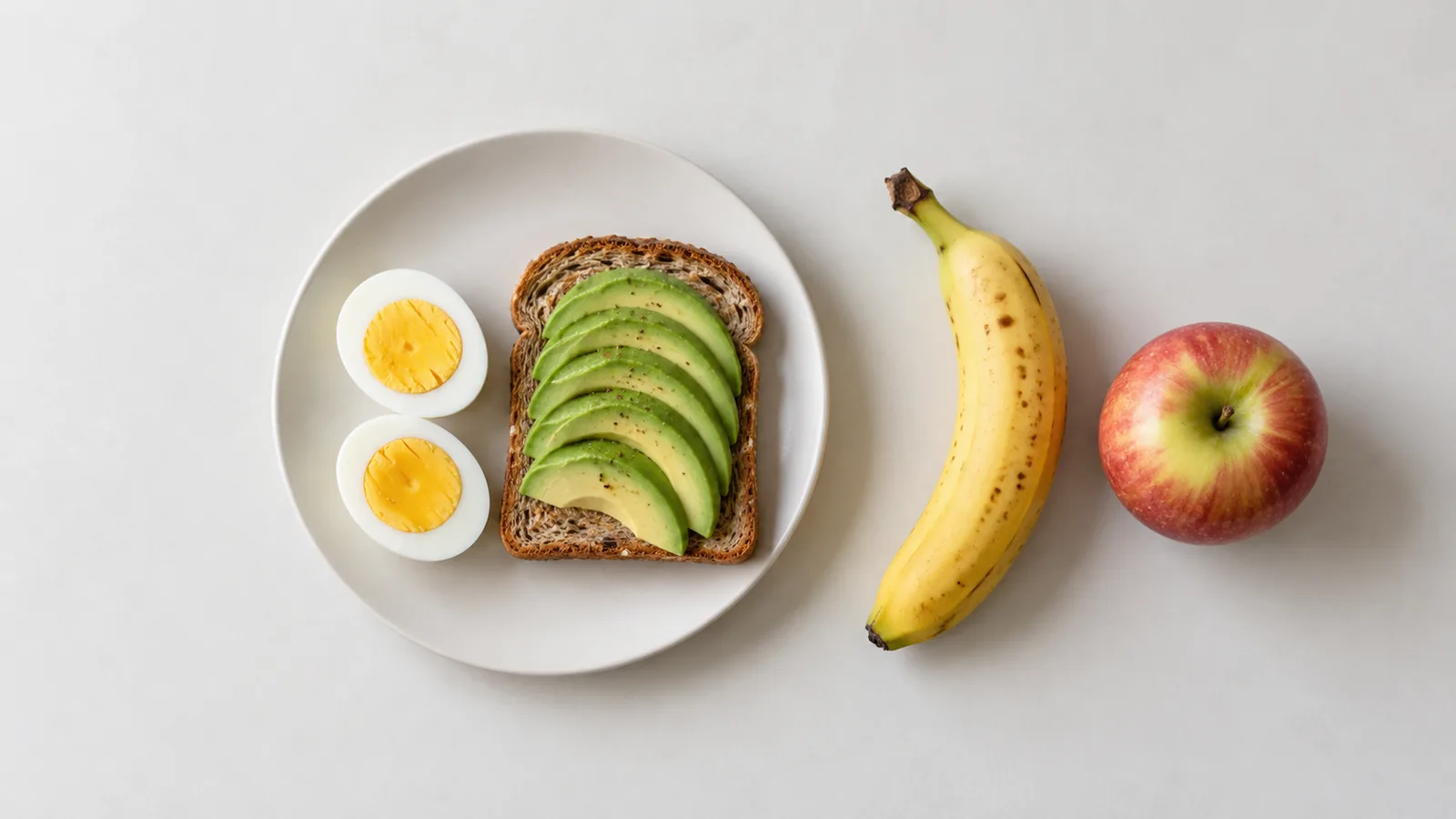
For food that comes in pieces, start with how many you ate. Choose the closest size in your food database, or use the package information for a slice or piece. These reference portions show how it works [1]:
| Food | Reference portion | Calories (kcal) |
|---|---|---|
| Hard-boiled egg | 1 large (50 g) | 78 |
| Banana | 1 medium (118 g) | 105 |
| Apple | 1 medium (182 g) | 95 |
| Whole-wheat bread | 1 slice (32 g) | 81 |
| Avocado | Half (about 100 g) | 161 |
The weights describe the reference portions. You do not need to weigh each piece to use them.
Size still matters. Half a small avocado is not half a large one, and bread slices vary in thickness. Choose a reasonable match and use your product's label when you have it. Log spreads and toppings separately when the entry does not include them.
2. Use cups and spoons for food you serve yourself
For loose or spoonable food, a measuring cup or spoon gives you a portion you can describe [1].
| Food | Reference portion | Calories (kcal) |
|---|---|---|
| White rice, cooked | 1 cup (158 g) | 205 |
| Pasta, cooked | 1 cup penne (107 g) | 169 |
Match the preparation to the entry. These values are for cooked food, so choose a cooked entry for what is on your plate.
Use measuring utensils when you check a portion. A mug is not a measuring cup, and an eating spoon can hold a different amount from a measuring tablespoon. For spoon measures, note whether the portion is level or heaped.
Measure a familiar portion once in a while, then look at how it sits in your usual bowl. That gives you a reference for later estimates without measuring every meal.
3. Read the label, then adjust for what you ate
On packaged food, check what the calorie number refers to: one serving, the whole package or a stated weight. Then match it to your portion. If the label gives calories for two slices and you eat one, use half. If you eat a whole pot, check whether the label describes the whole pot or only part of it.
When a label gives values only by weight, the package's total weight helps. You can estimate the share of the package you ate, although that is still approximate.
A barcode scan finds a packaged food entry. You still need to check the product, the serving size and the amount you ate; scanning the code does not measure your portion.
For repeat meals, keep a note of the usual ingredients and portions. Reuse that starting point and adjust anything that changed.
Give small, calorie-dense portions an occasional check
A small amount of food can carry a lot of calories. These foods all fit into your meals; their portions simply deserve some attention when you estimate [1].
-
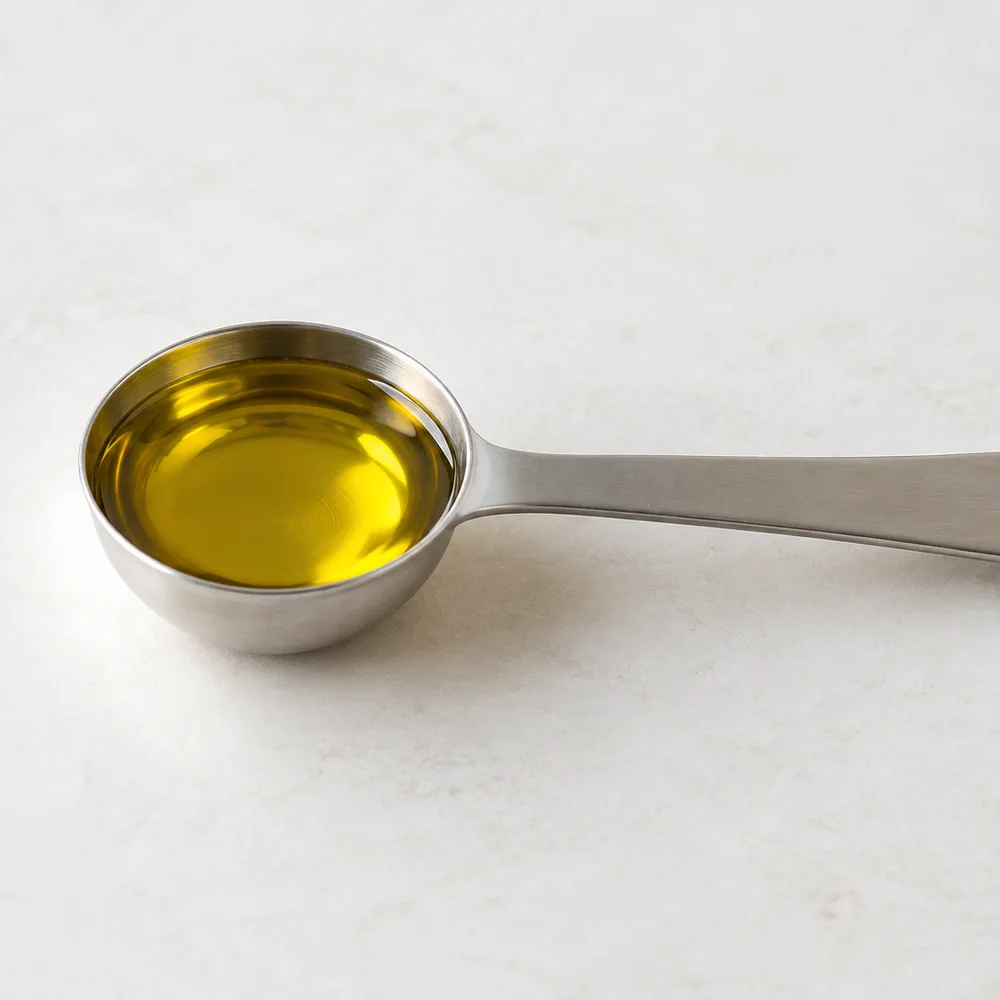 119 kcal Olive oil 1 tbsp (13.5 g)
-
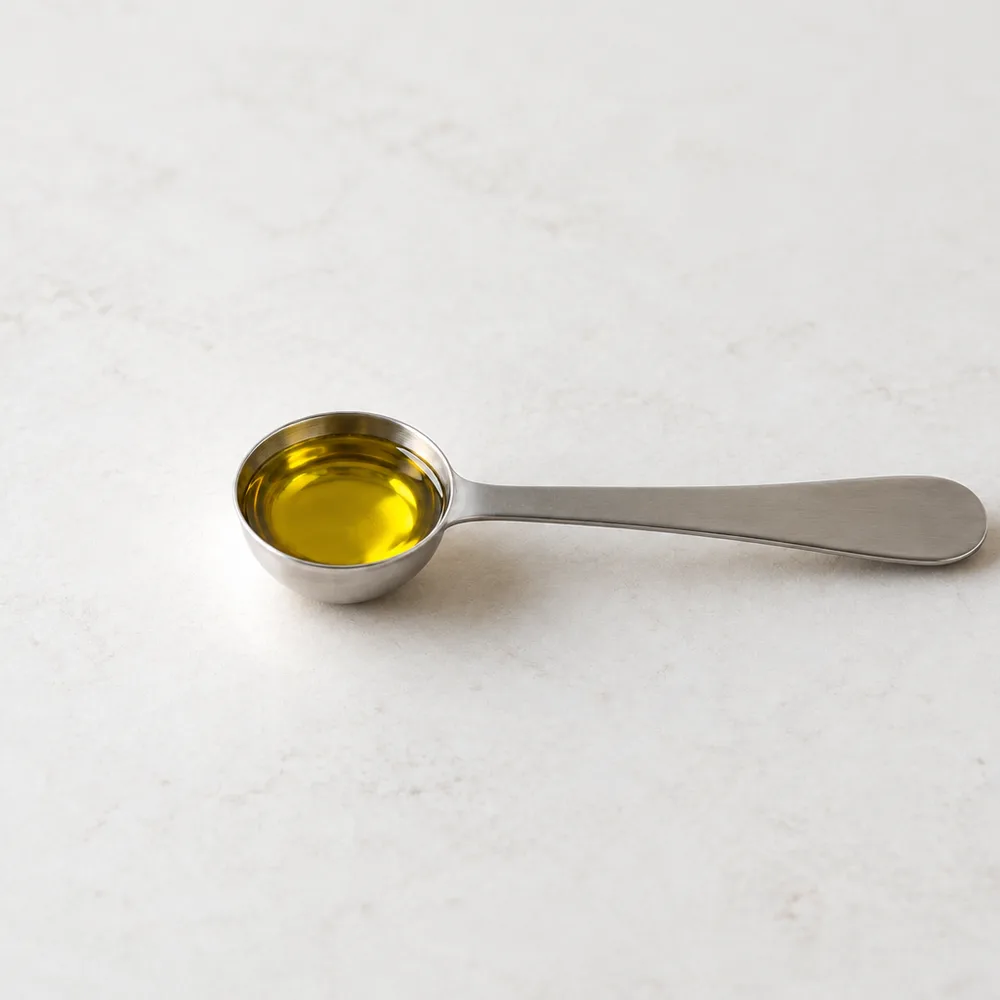 40 kcal Olive oil 1 tsp (4.5 g)
-
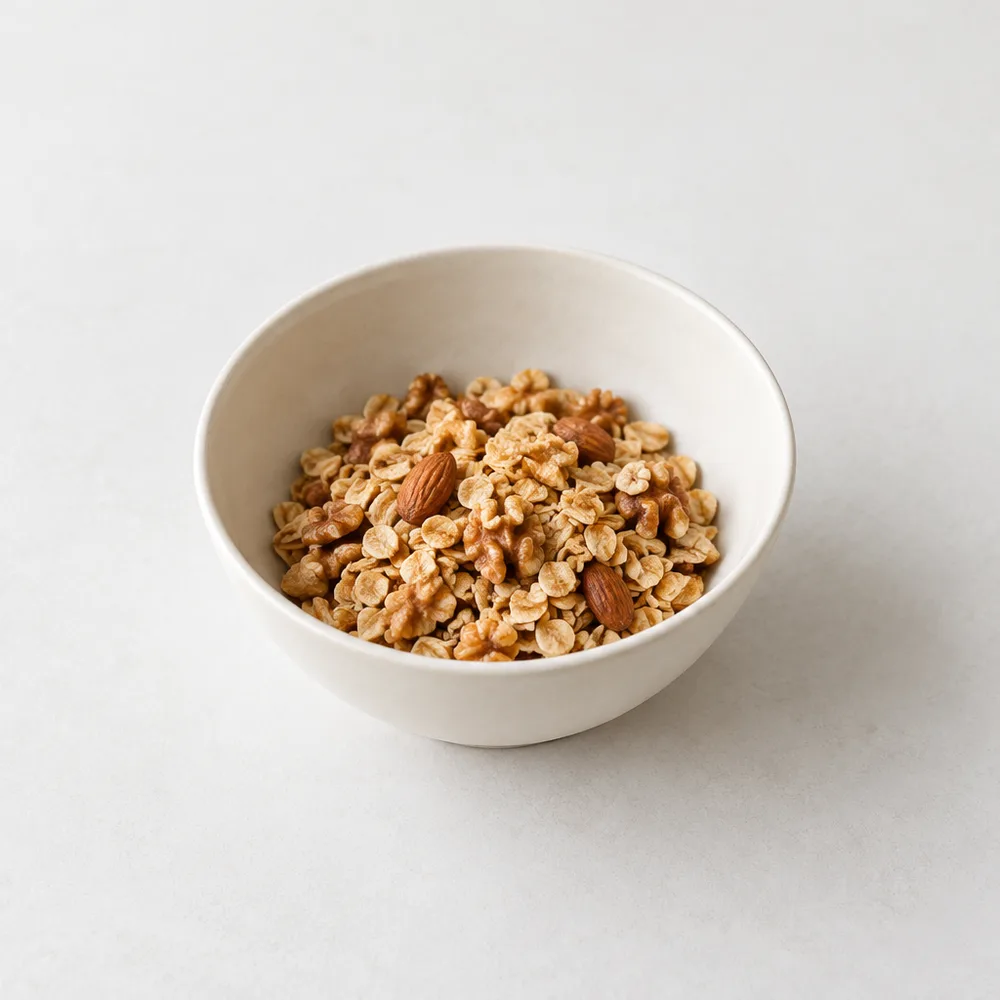 139 kcal Granola 1 oz (28.35 g)
-
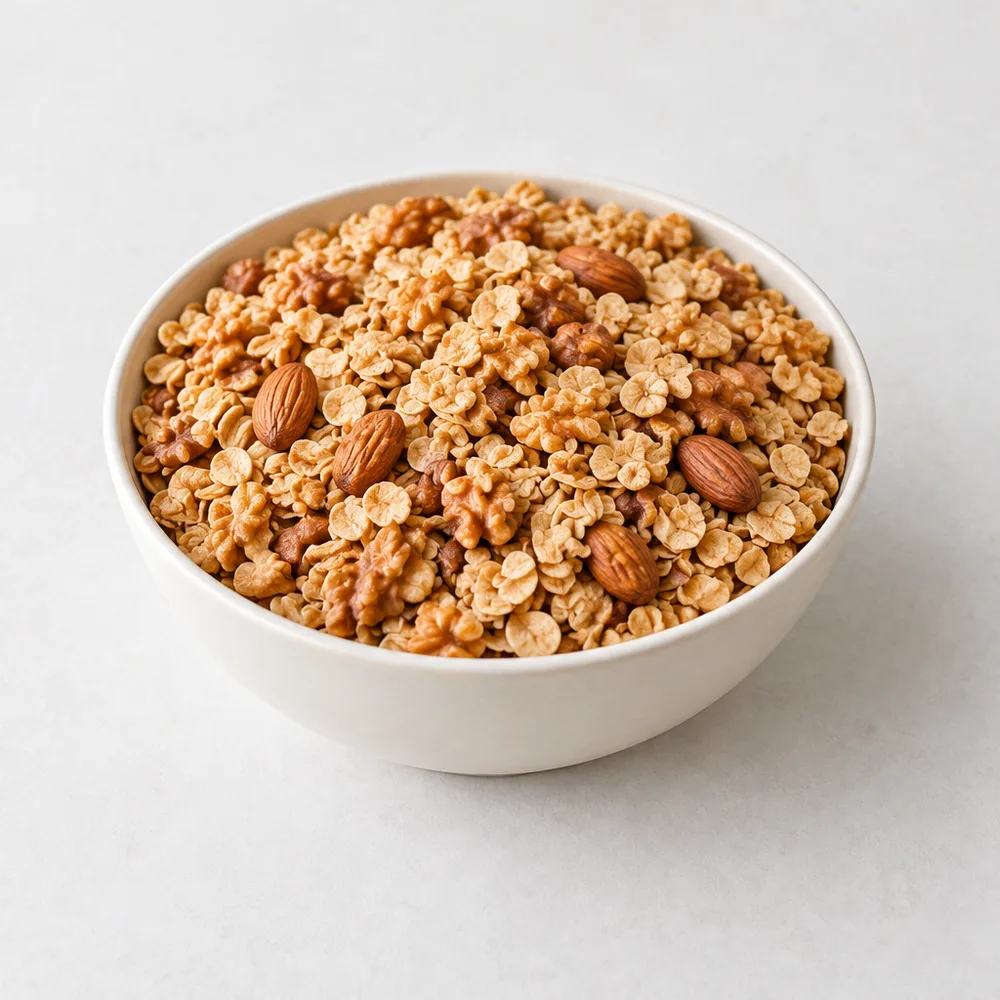 597 kcal Granola 1 cup (122 g)
-
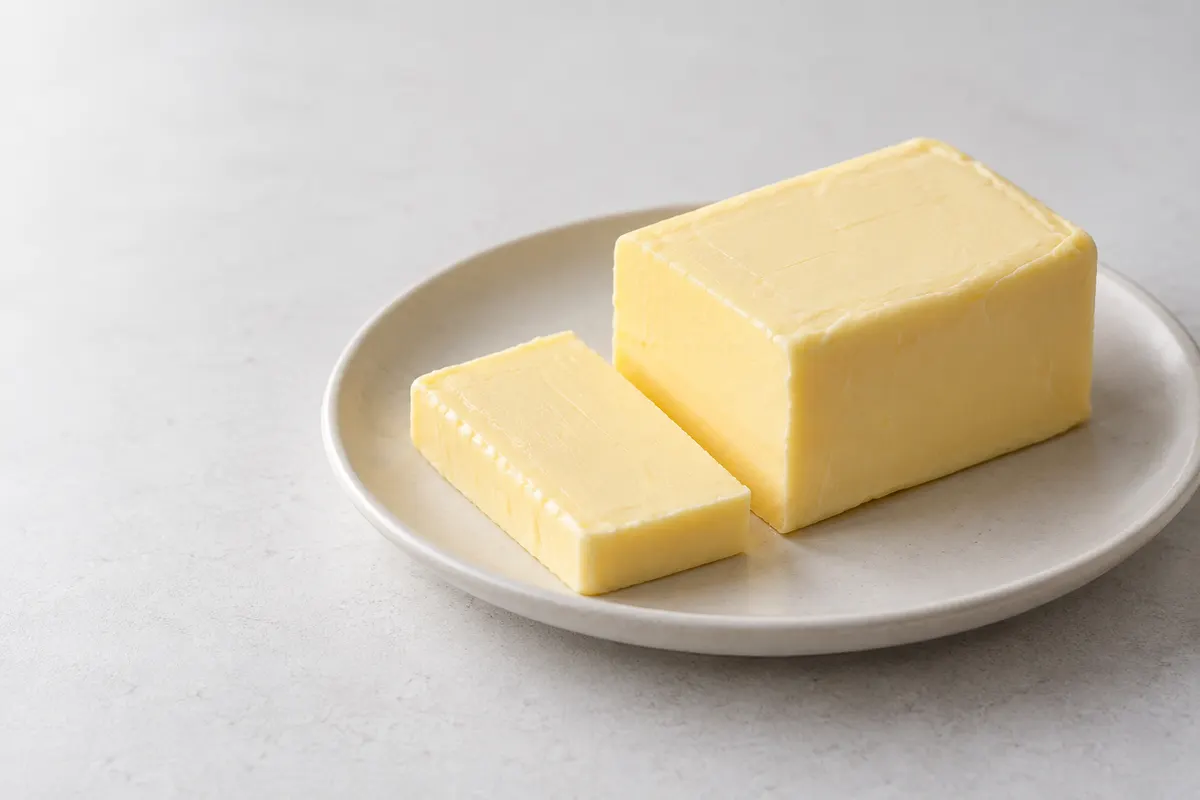 102 kcal Butter 1 tbsp (14.2 g)
-
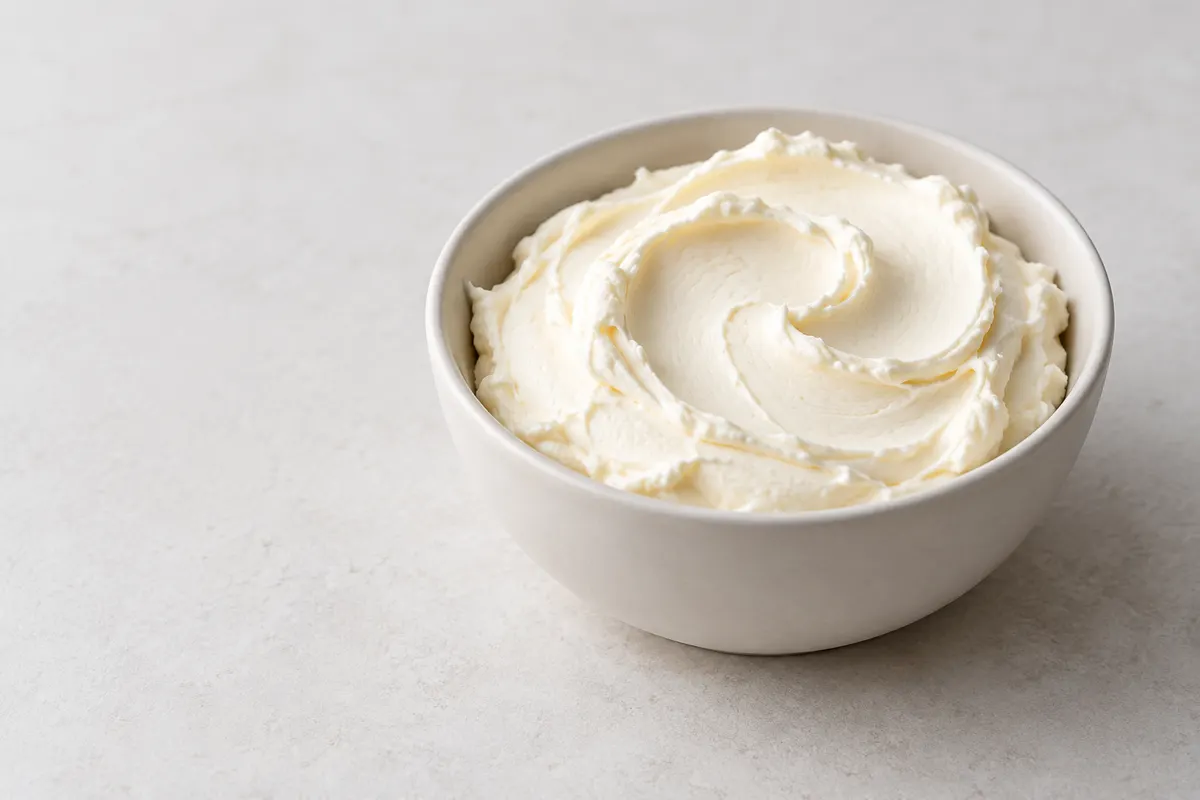 51 kcal Cream cheese 1 tbsp (14.5 g)
-
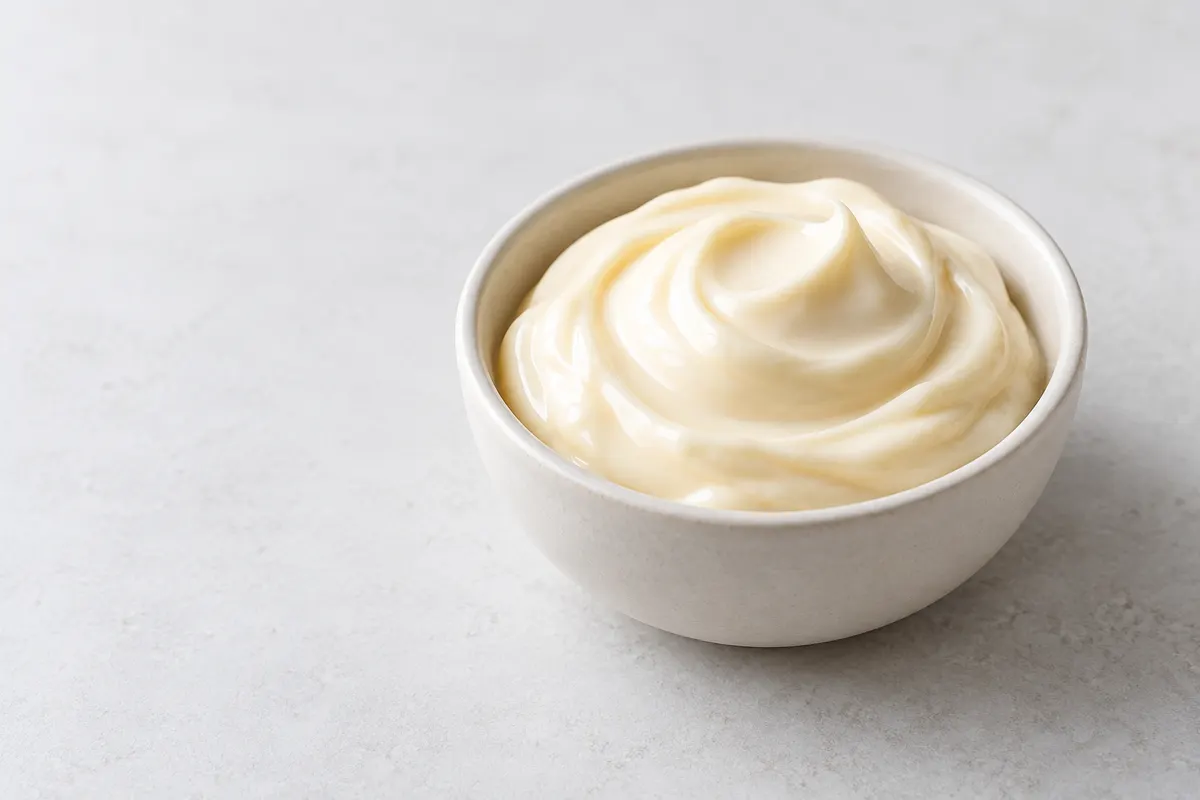 94 kcal Mayonnaise 1 tbsp (13.8 g)
-
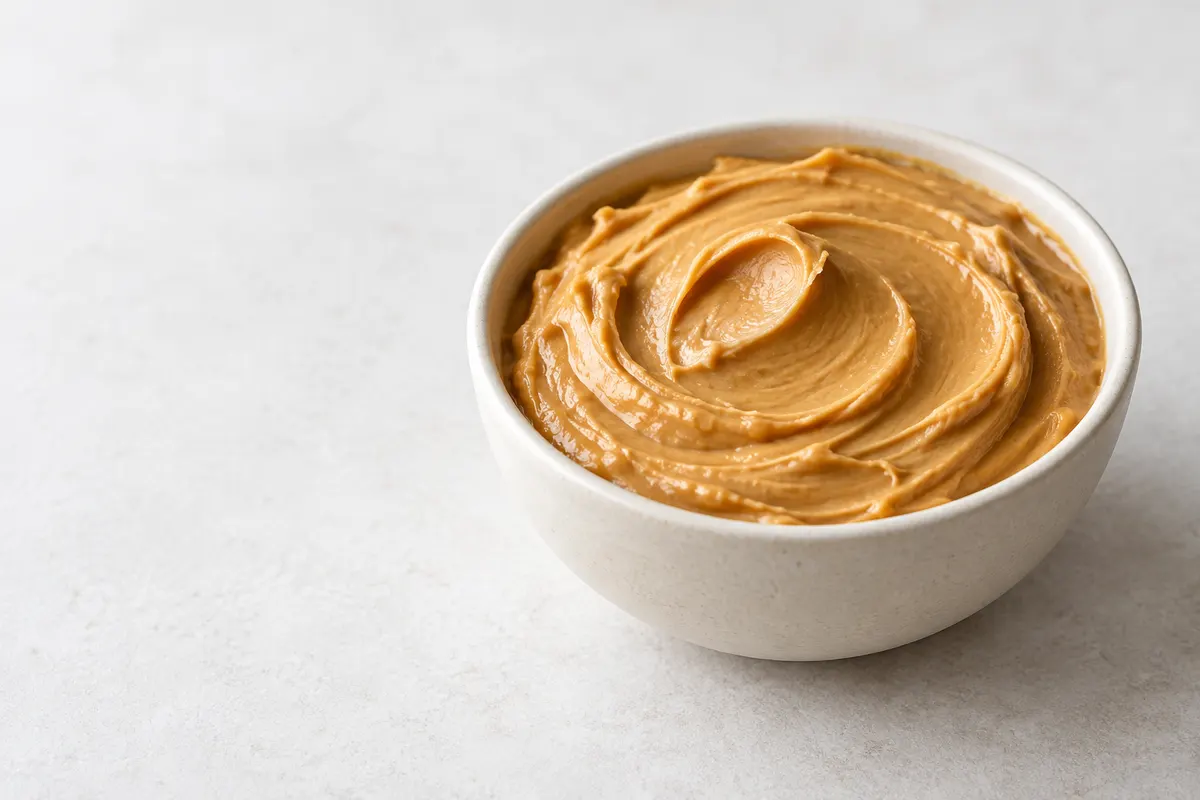 191 kcal Peanut butter 2 tbsp (32 g)
-
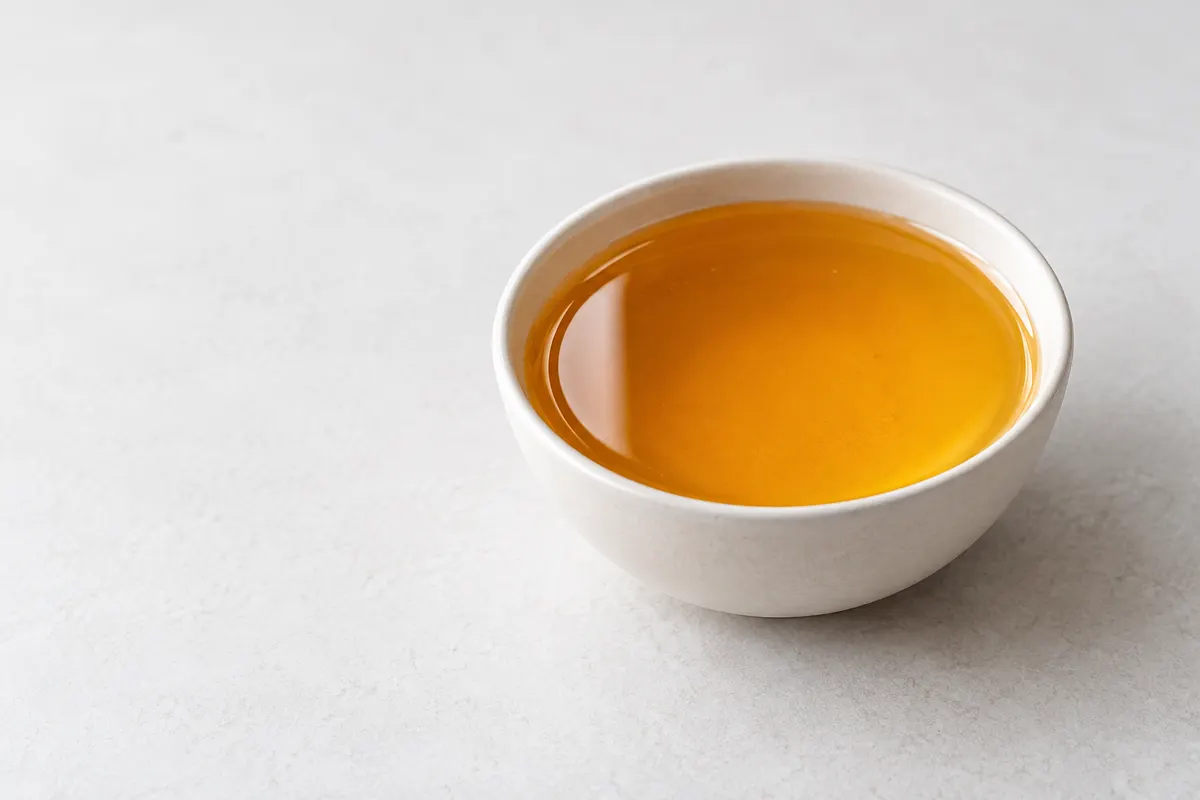 64 kcal Honey 1 tbsp (21 g)
-
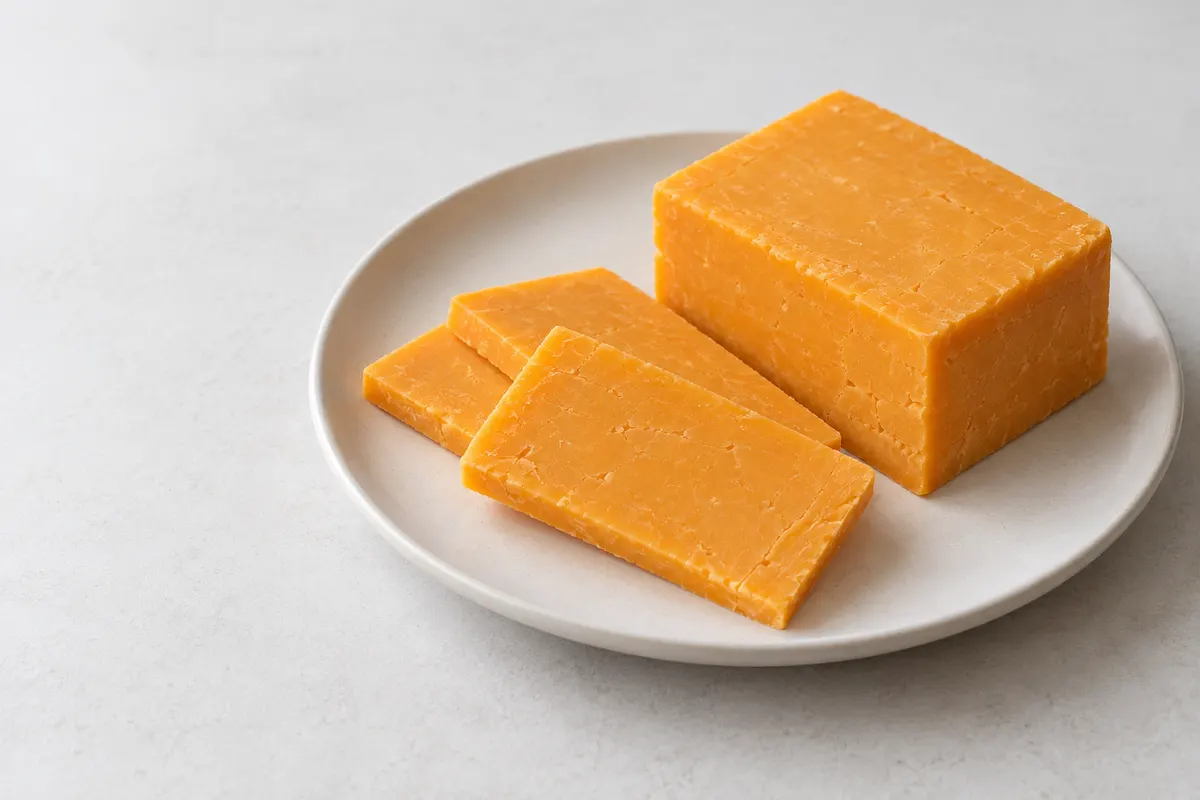 113 kcal Cheddar 1 slice, 1 oz (28 g)
-
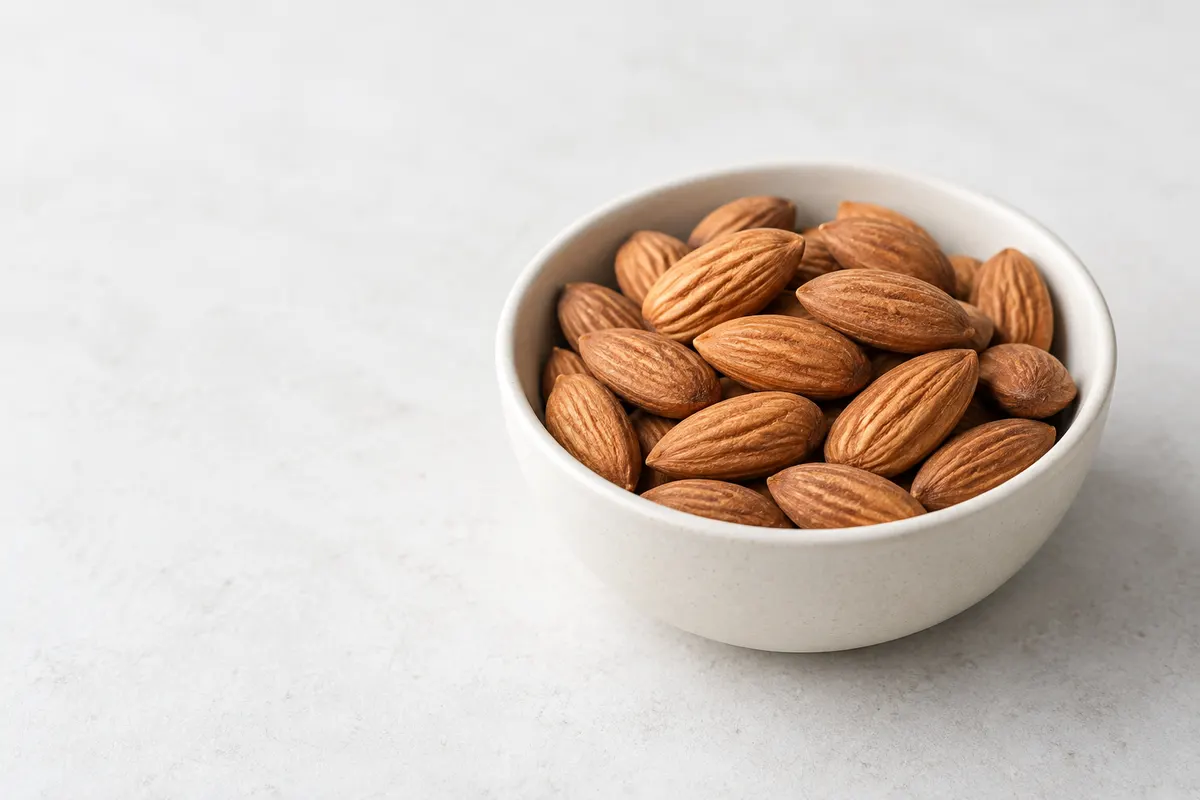 164 kcal Almonds 1 oz, about 23 almonds (28.35 g)
-
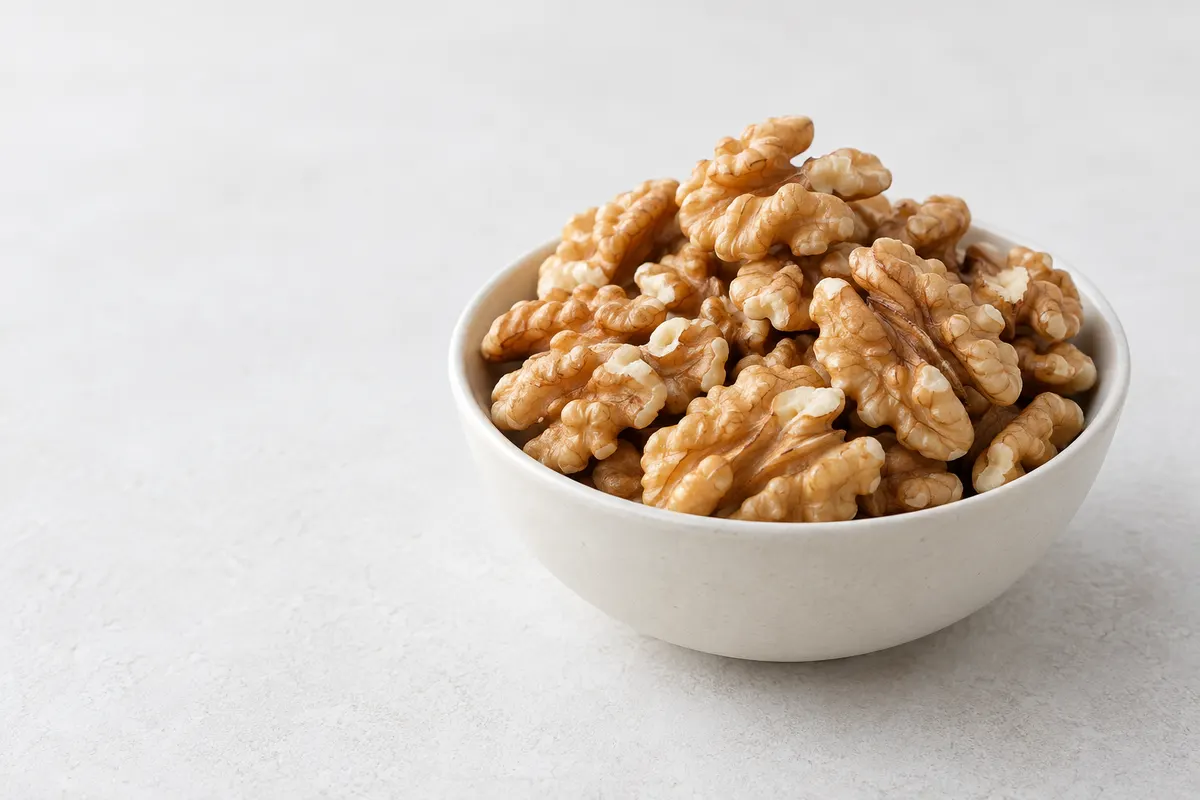 185 kcal Walnuts 1 oz, about 14 halves (28.35 g)
These are reference values. Use the label for your product when you have it.
The ounce portions above are weights, not household measures. A handful of almonds is not automatically 1 oz. Without a scale, use a labeled single portion, a piece count from the package or an estimated share of the pack.
For granola, check the serving unit carefully: the cup and the ounce describe very different amounts. For dressings, use the bottle's serving information and now and then check your usual pour with a measuring spoon.
The calories per gram calculator shows how fat, protein and carbohydrates add calories. The guide to low-calorie, high-volume foods explains why the same calories can take up very different space.
Is it okay to estimate calories by eye?
Yes, you can use visual estimates for everyday logging. Treat them as approximate and give yourself a familiar portion to compare with. Try this with something you eat often:
- Serve your usual amount. Estimate how many cups or spoonfuls it is.
- Check it with a measuring utensil. Measure what you actually served.
- Look at it in your usual dish. Notice the amount and update your estimate if needed.
- Repeat now and then, especially when you change bowls, serving spoons or products. The purpose is to learn what your usual portion looks like.
You can also use your hand as a rough size reference, but a palm or fist does not match one fixed calorie amount. What the food is and how it was cooked still matter.
For a mixed meal away from home, choose the closest description you can find. Consider the main ingredients and any visible sauce or dressing. You may not know the recipe, and a reasonable estimate can stay uncertain. The guide to counting calories when you eat out goes through it step by step.
Keep logging when an estimate is imperfect
If an exact number is not available, make a reasonable estimate and go on with your next meal. Check repeated uncertainties when you can, especially portions you use often.
A 2011 systematic review found a consistent link between self-monitoring and weight loss. The authors judged the evidence weak because of study limitations, including reliance on self-reported information and little diversity among participants [2]. That does not prove that regular logging matters more than accuracy. The practical point is not to make exact numbers a condition for logging at all.
Include meals, snacks, drinks and additions as best you can. If you notice an estimate was off, correct it when possible. You do not need to work out every uncertain detail before you log the next meal.
The aim is a diary you understand and keep using, with familiar portions that do not need a new calculation every time.
Use a photo estimate as a starting point
In a 2003 study, portion estimates from photos and from direct visual observation were closely correlated with weighed portions, with small over- and underestimates. The estimates came from trained observers using reference servings, not from the people eating the meals, and the study did not test an AI calorie app [3].
When you review an AI photo estimate, check:
- The food and preparation: does the description match what you ate?
- The portion: does the suggested amount look like the pieces, cups or spoonfuls on your plate?
- The additions: does the estimate include oil, dressing, spreads or sauce?
A photo cannot show exact weight, hidden oil or every ingredient in a recipe. Add what you know and correct what looks wrong before logging.
Log an estimated meal in ClariMeal
ClariMeal gives an editable estimate of calories, protein, carbs and fat for you to review and correct before logging. Photos are sent for analysis only with your consent. You can also log by search or barcode.
Log a Meal by PhotoLog a Meal by Photo
Sources
- U.S. Department of Agriculture, Agricultural Research Service. FoodData Central. fdc.nal.usda.gov ↑
- Burke LE, Wang J, Sevick MA. Self-monitoring in weight loss: a systematic review of the literature. Journal of the American Dietetic Association 2011;111(1):92-102. doi.org/10.1016/j.jada.2010.10.008 ↑
- Williamson DA, Allen HR, Martin PD, et al. Comparison of digital photography to weighed and visual estimation of portion sizes. Journal of the American Dietetic Association 2003;103(9):1139-1145. doi.org/10.1016/s0002-8223(03)00974-x ↑