Low-Calorie, High-Volume Foods: How to Feel Full on Fewer Calories
Smaller portions can leave you hungry soon after a meal. Losing weight should not mean spending the day thinking about your next meal.
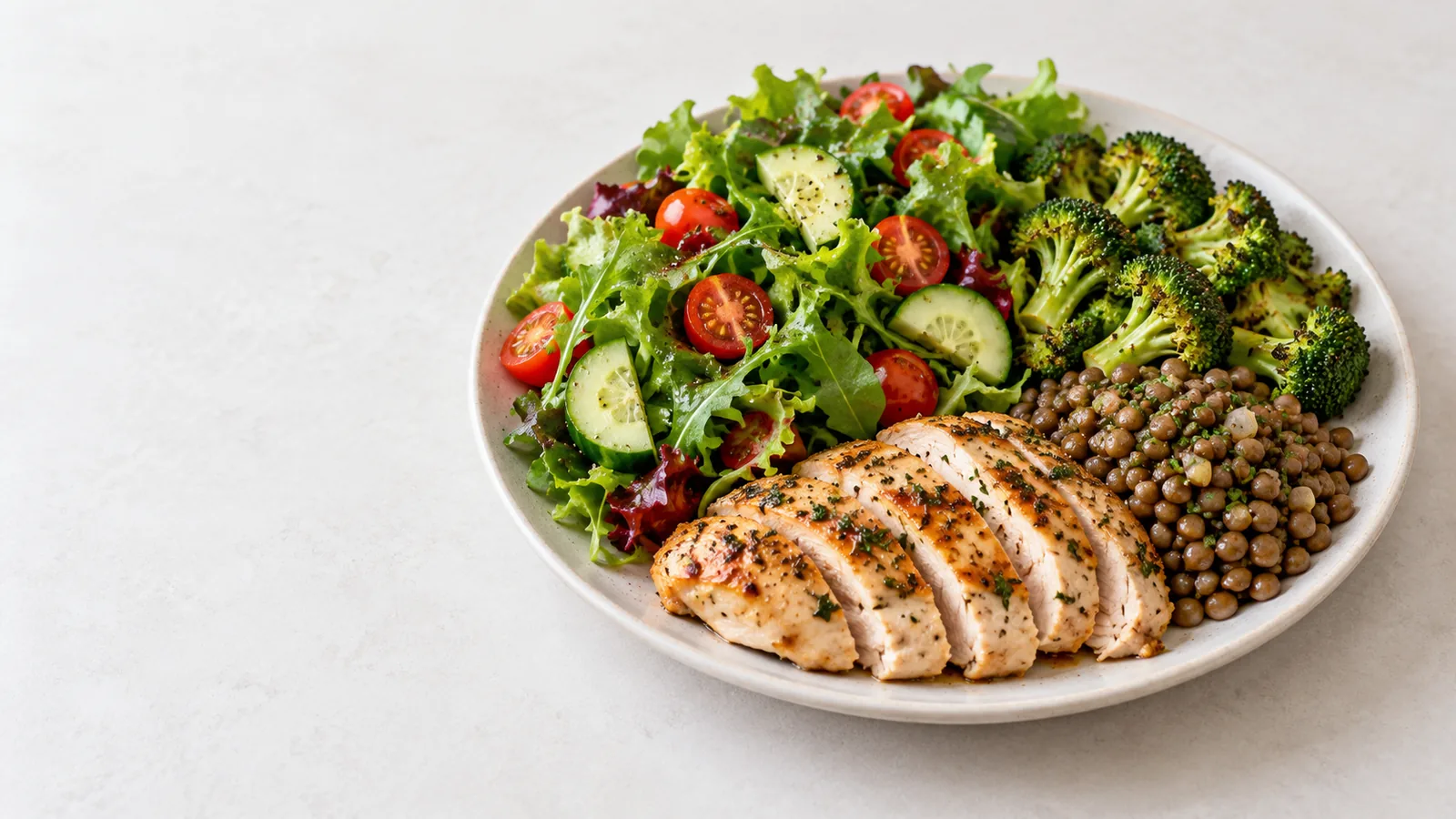
The answer is not always less food. Low-calorie, high-volume foods help you build bigger, more satisfying meals while keeping calories manageable. Foods with plenty of water, such as vegetables and fruit, give you more food by weight for the same calories.
But volume is not everything. Protein can help with fullness, and foods with more calories per gram still have a place in your meals.
The goal is to eat enough to feel satisfied, not to ignore hunger or make every plate as low in calories as possible.
Why food volume matters for fullness
A food's energy density is how many calories it contains per gram. Foods with low energy density give fewer calories for the same weight. Foods with high energy density contain more calories in the same weight.
Water makes much of the difference: it adds weight and volume without adding calories. Fat works the other way. It has about 9 kcal per gram, while protein and carbohydrates have about 4 (calories per gram). This is why water-rich vegetables and fruit take up more space on your plate than foods with more fat.
Research by Barbara Rolls found that people often eat a fairly consistent weight of food. In controlled studies, lowering the energy density of meals lowered calorie intake while fullness stayed similar [1].
That does not mean everyone feels satisfied by the same amount of food. But it gives you a practical way to build meals that feel substantial without relying on smaller and smaller portions.
What 200 calories looks like in grams
Two portions can contain about 200 calories and look very different. Here is how much of each food gives about 200 kcal, using rounded USDA values [2].
-
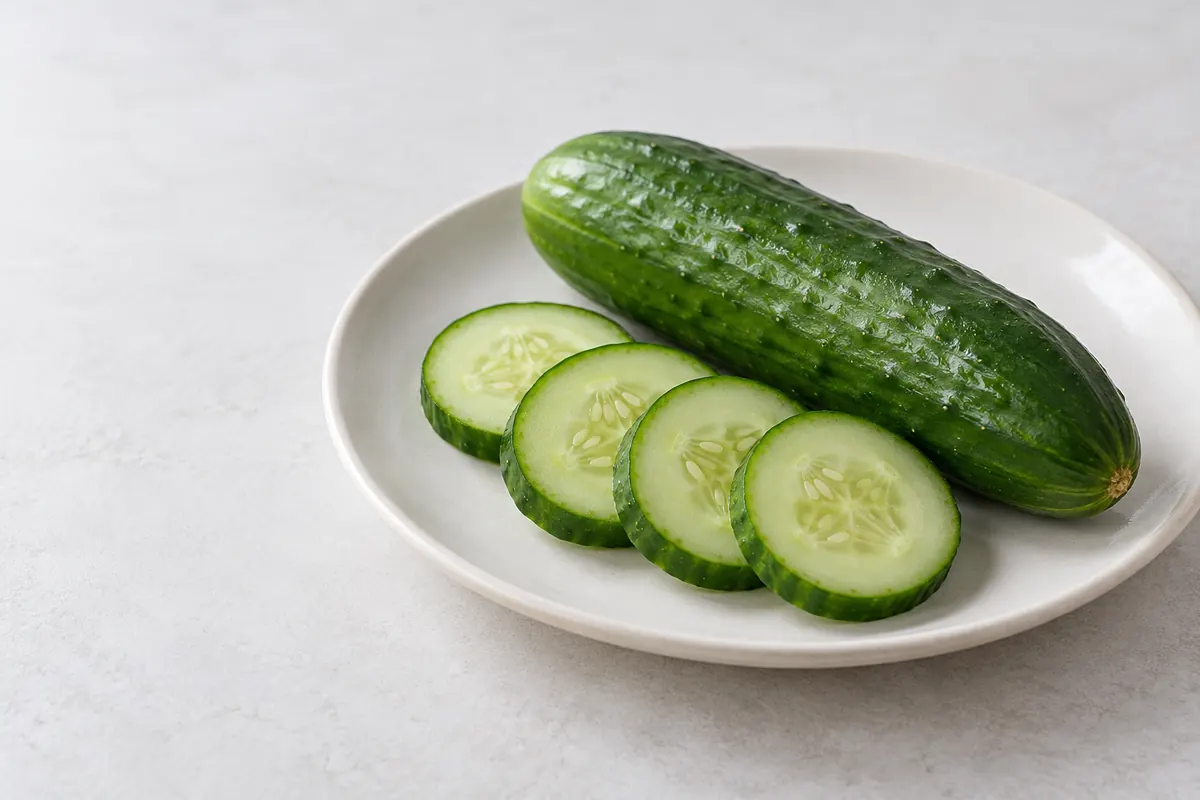 1,333 g Cucumber raw
-
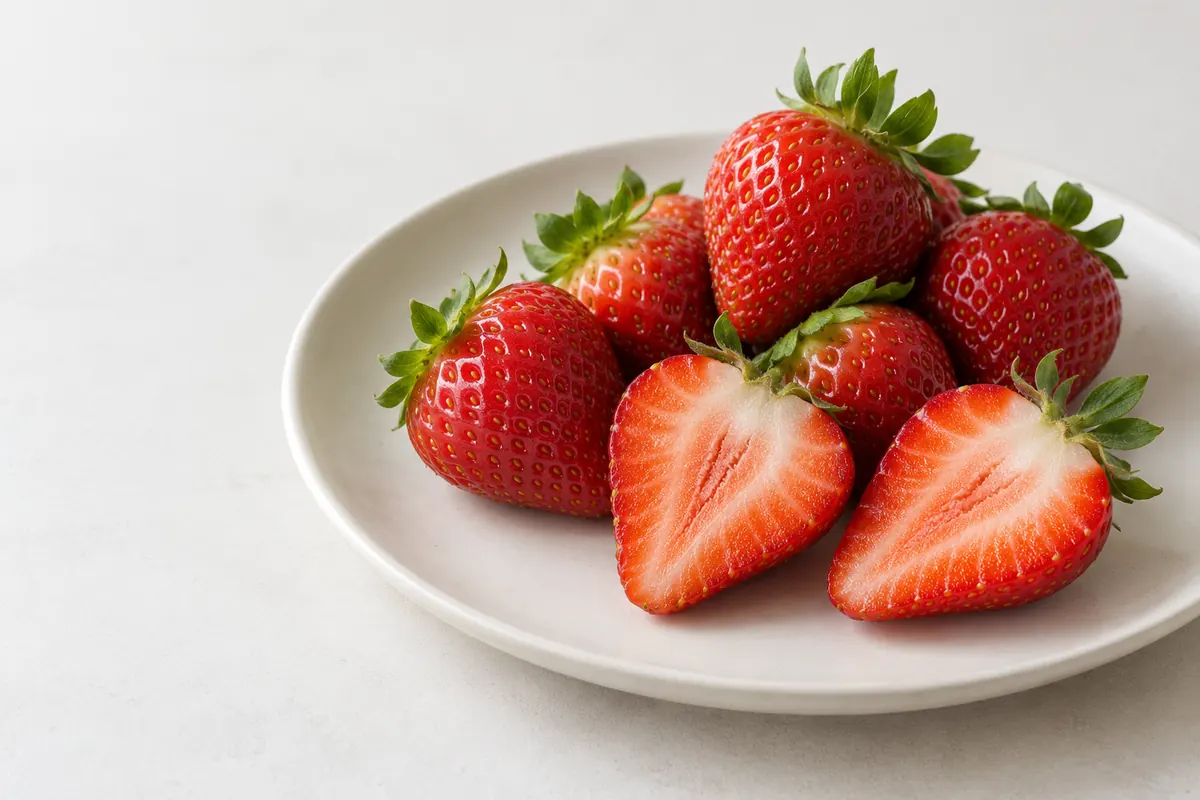 625 g Strawberries raw
-
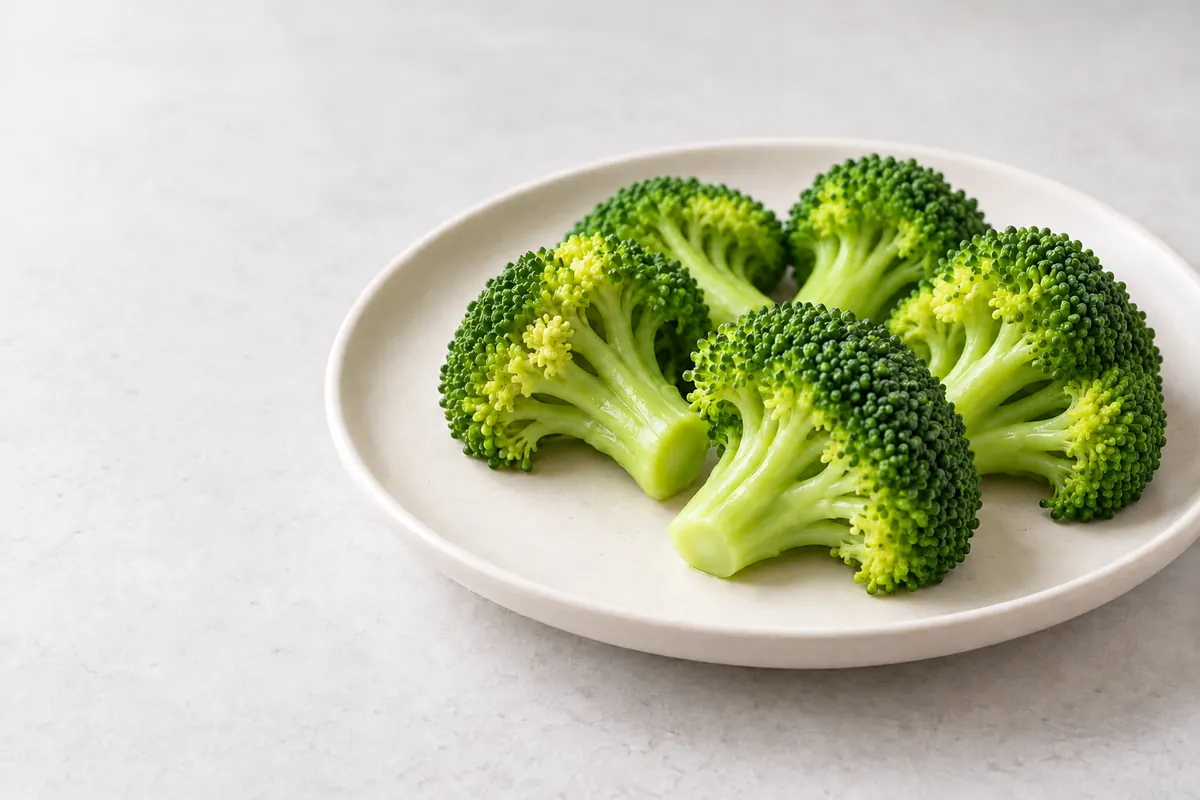 571 g Broccoli boiled
-
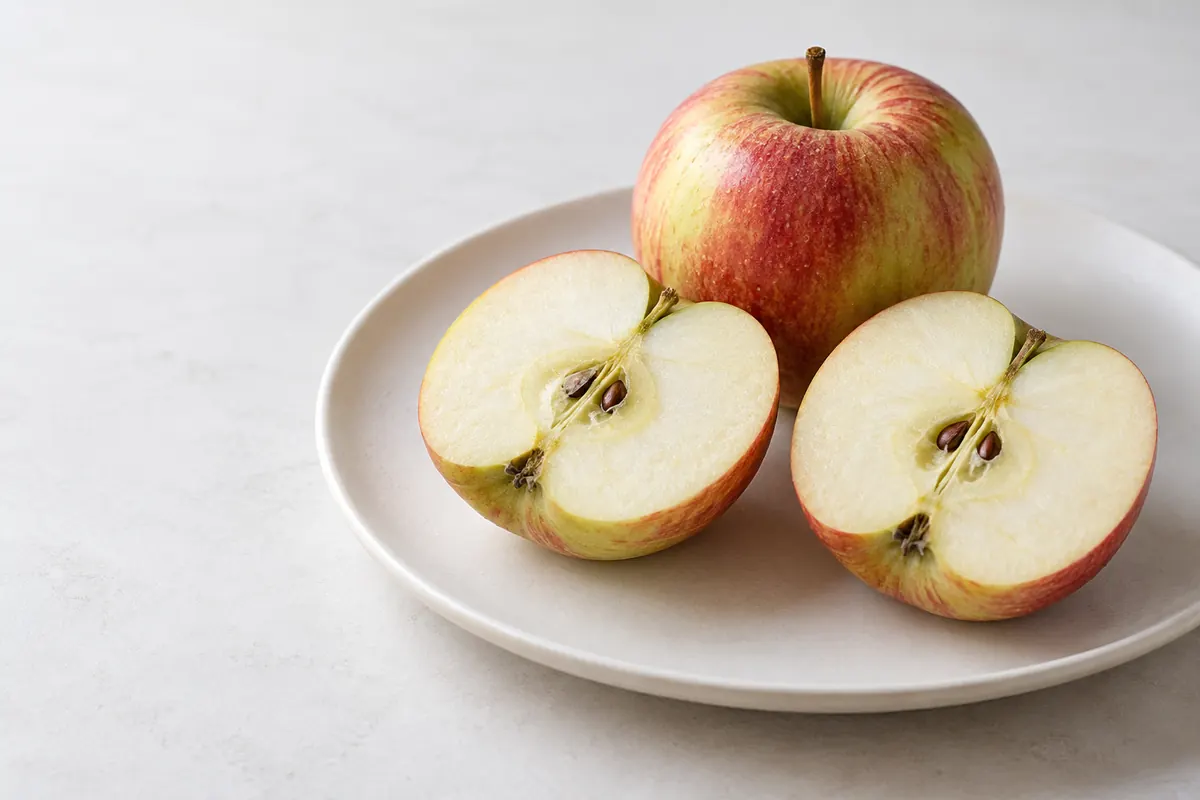 385 g Apple raw
-
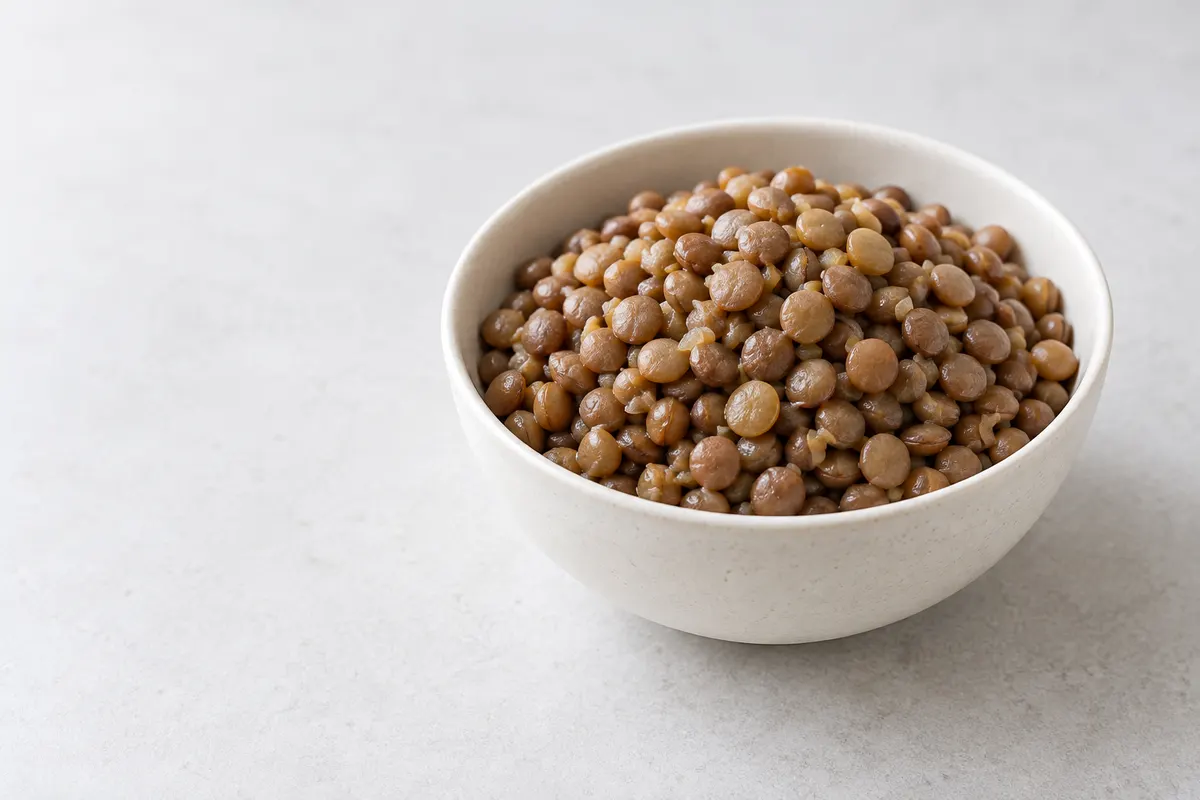 172 g Lentils cooked
-
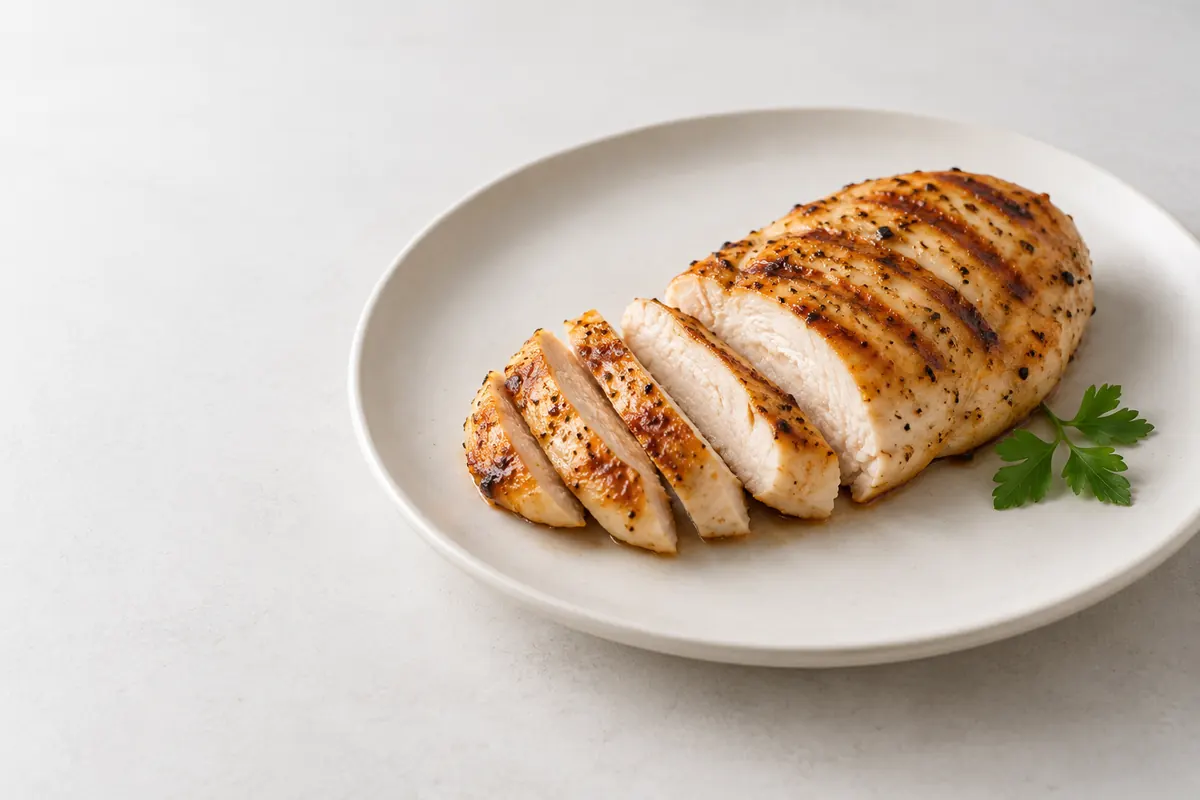 121 g Chicken breast roasted
-
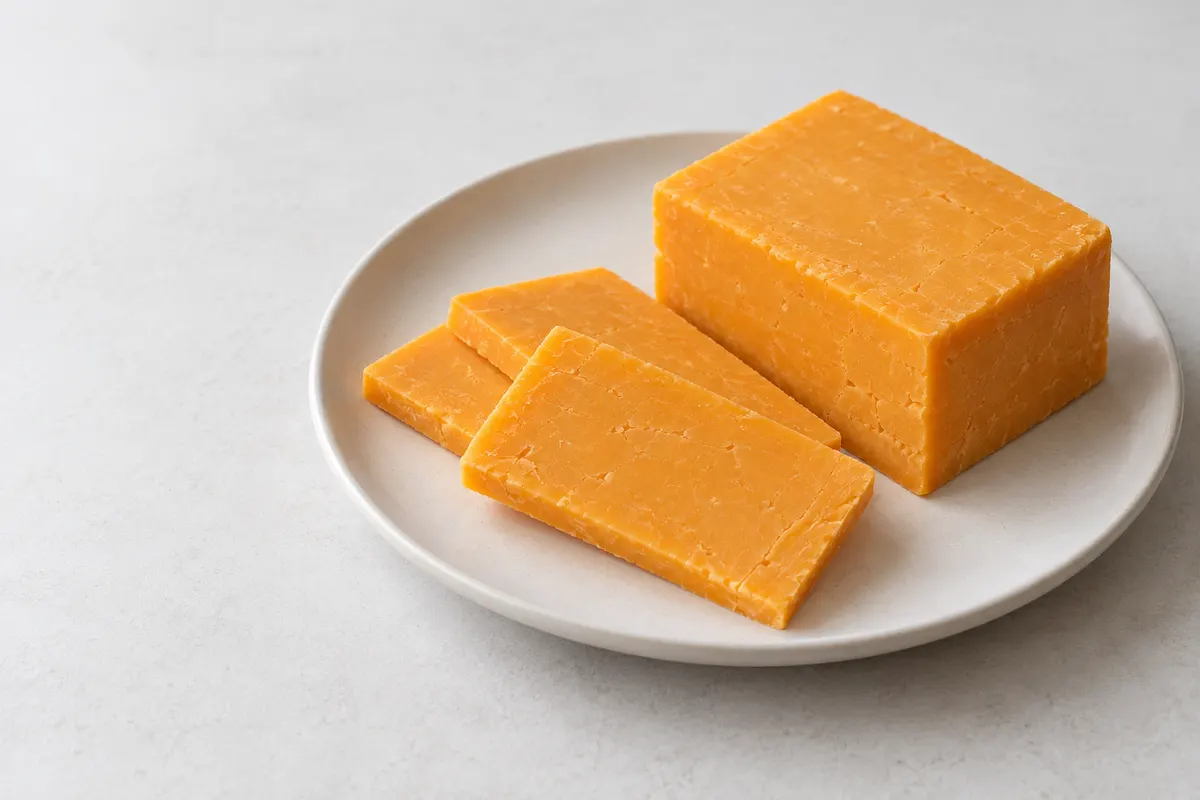 50 g Cheddar hard cheese
-
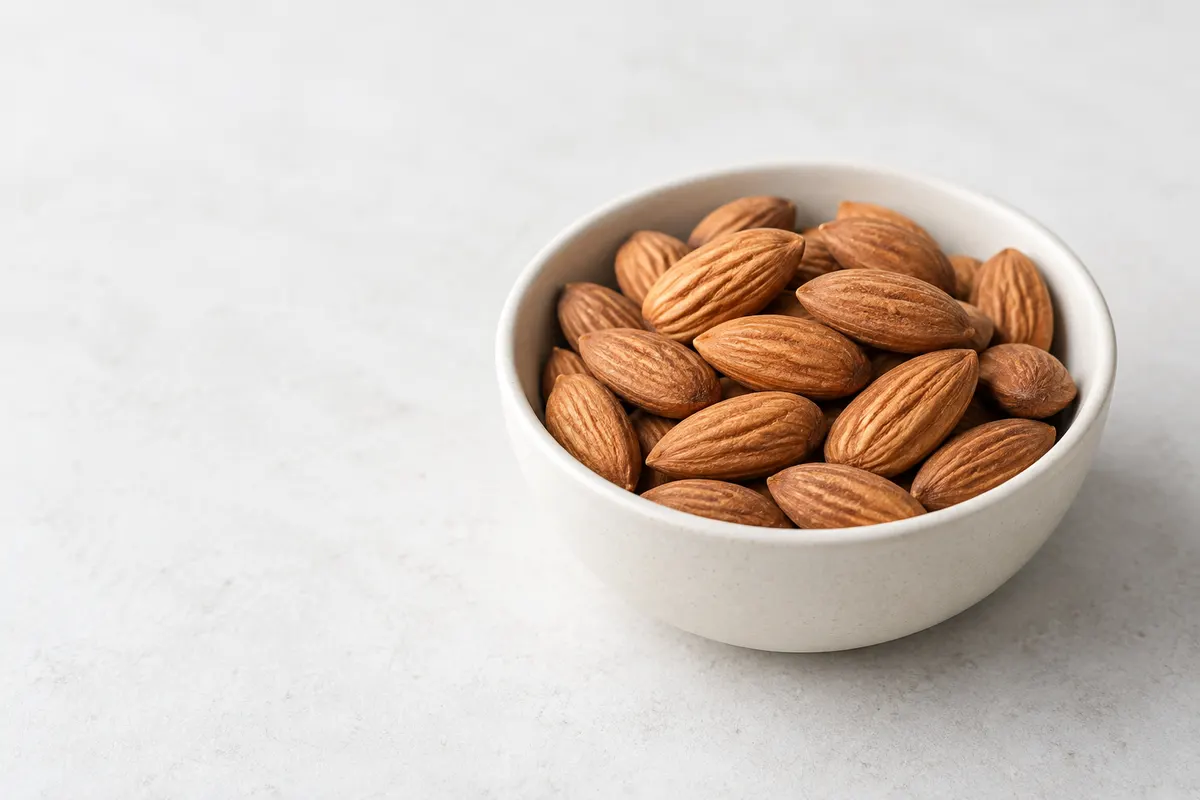 35 g Almonds whole
| Food | kcal per 100 g | Grams for 200 kcal |
|---|---|---|
| Cucumber, raw | 15 | 1,333 |
| Strawberries, raw | 32 | 625 |
| Broccoli, boiled | 35 | 571 |
| Apple, raw | 52 | 385 |
| Greek yogurt, plain low-fat | 73 | 274 |
| Potato, baked with skin | 93 | 215 |
| Lentils, cooked | 116 | 172 |
| Pasta, cooked | 158 | 127 |
| Chicken breast, roasted | 165 | 121 |
| Cheddar | 403 | 50 |
| Almonds | 579 | 35 |
| Olive oil | 884 | 23 |
Values are approximate and refer to the foods in the stated preparation. Calories can vary with ingredients, brands and cooking methods.
About 571 g of boiled broccoli has roughly the same calories as 35 g of almonds. But this is not a ranking of which foods you should eat.
Almonds, cheese and olive oil are useful foods. Their calories fit into a smaller amount of food, and they add flavor, variety and energy to a meal.
The large portions in the table are comparisons, not serving sizes. You do not need to eat a kilogram of cucumber to benefit from lower-energy-density foods. A satisfying plate can combine foods from different rows. What matters is how the whole meal works for you.
For what a zero on a label means, see zero-calorie foods.
How to build a fuller plate without making meals complicated
You do not need a completely different diet. Start with meals you already enjoy and consider four adjustments.
1. Try a vegetable-rich starter
A salad or a broth-based vegetable soup can add volume to a meal. Choose one you enjoy, rather than treating it as something you must eat before every lunch or dinner.
In a controlled lunch study, lower-energy-density salads served before the main course reduced total meal calorie intake, while salads with higher energy density increased it. The amount of dressing and cheese made the difference [3].
So the ingredients matter, not just the size of the salad.
2. Add vegetables and fruit to familiar meals
Add vegetables next to your usual main dish, put extra vegetables in a soup or have fruit with breakfast.
In a year-long trial of two reduced-fat diets, women who were also encouraged to eat more water-rich fruit and vegetables ate a greater weight of food and reported less hunger than women on the reduced-fat diet alone [4].
You do not have to replace every calorie-dense food. Adding water-rich foods lowers a meal's overall energy density while you keep the foods you enjoy.
3. Include a source of protein
A large plate of vegetables may not be satisfying on its own. Include a protein source such as yogurt, beans, eggs, fish or poultry.
Research suggests that higher-protein meals can modestly increase how full you feel. But this does not reliably mean you will eat fewer calories at the next meal [5]. Protein is one part of a satisfying meal, not a guarantee that you will not feel hungry later.
For ideas, see the high protein, low calorie foods table and how much protein you need a day.
4. Keep calorie-dense foods in amounts that suit the meal
You do not need to remove cheese, nuts, dressing or oil. But their calories add up in small amounts. If you are estimating a meal's calories, count them rather than judging the plate by its size.
You can measure one ingredient when the amount is unclear, without weighing every food on the plate.
A fuller meal does not need to be made only from low-calorie foods. It needs a combination that you enjoy and find satisfying.
Does fiber keep you full?
Fiber is often mentioned with high-volume foods because many vegetables, fruits, beans and whole grains contain it. But more fiber does not automatically mean more fullness.
A systematic review by Clark and Slavin found that most single fiber treatments did not improve reported fullness in short-term studies. Results varied across fiber sources [6].
That does not make fiber unimportant. It means you should not expect one high-fiber ingredient or supplement to solve hunger on its own. Look at the meal as a whole: its volume, protein, other ingredients and how satisfied you feel afterward.
For options to add to meals you already like, see high fiber foods and high fiber snacks.
A fuller plate is not the same as a satisfying day
One meal can look generous and still leave you hungry. Another may be smaller and keep you satisfied.
Hunger is a normal signal. If you are still hungry after eating, that information matters. You may need a more substantial meal, not another attempt to cut its calories.
Notice over several meals which combinations leave you comfortably satisfied and which need adjusting. The aim is not to make every meal as large as possible for the fewest calories. It is an eating pattern that gives you enough food, fits your needs and feels manageable.
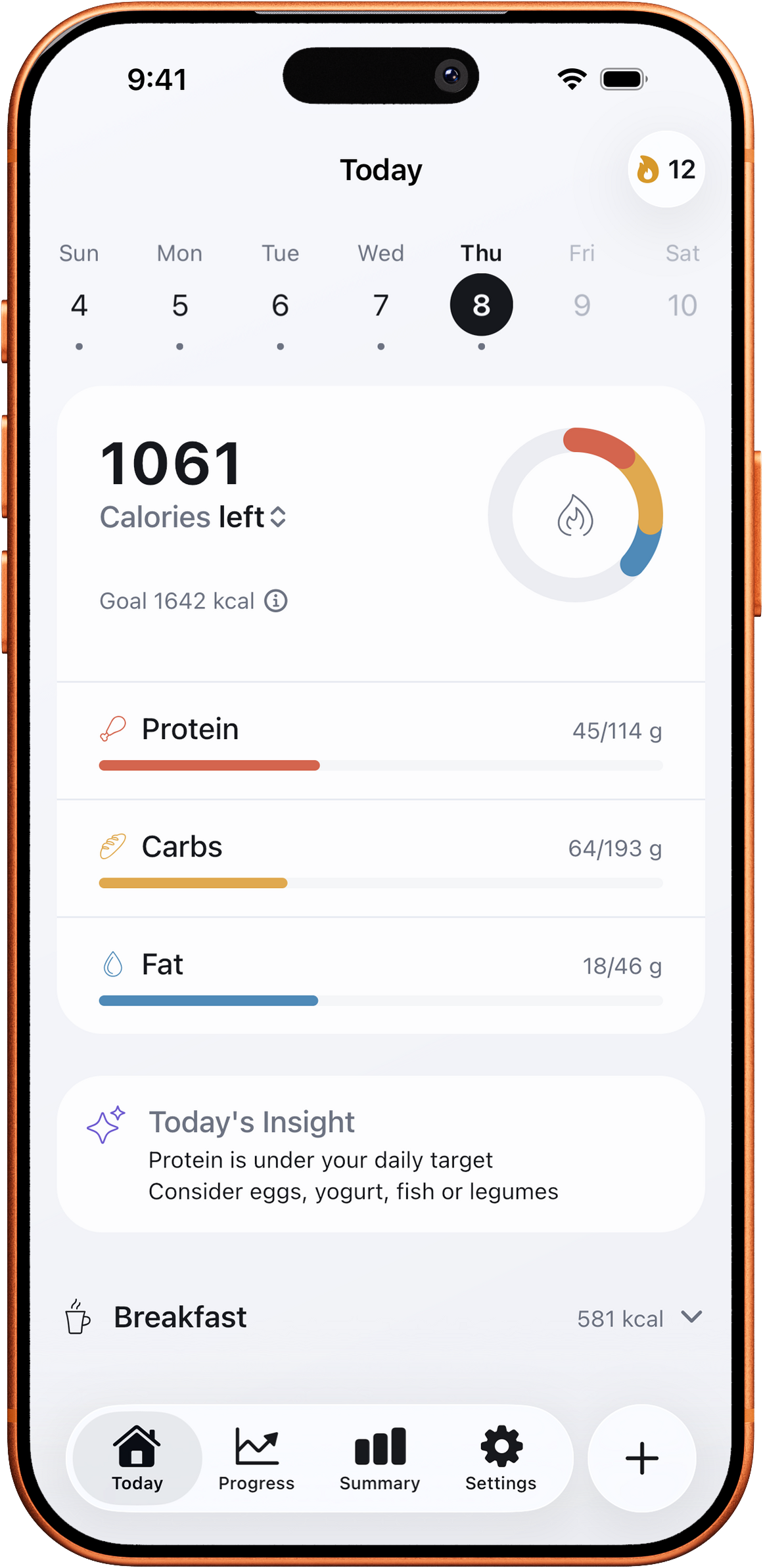
It is easier when you can compare the meals you eat with your calorie target without adding up every ingredient by hand. ClariMeal estimates calories and macros from a meal photo, with your consent. The result is an estimate you can correct for what a photo cannot show, such as hidden oil, sauce or exact amounts. The Today screen shows your logged calories and macros for the day against your targets. You can also log by search or barcode.
Log a Meal by PhotoLog a Meal by Photo
Sources
- Rolls BJ. The relationship between dietary energy density and energy intake. Physiology & Behavior 2009;97(5):609-615. doi.org/10.1016/j.physbeh.2009.03.011 ↑
- U.S. Department of Agriculture, Agricultural Research Service. FoodData Central. fdc.nal.usda.gov ↑
- Rolls BJ, Roe LS, Meengs JS. Salad and satiety: energy density and portion size of a first-course salad affect energy intake at lunch. Journal of the American Dietetic Association 2004;104(10):1570-1576. doi.org/10.1016/j.jada.2004.07.001 ↑
- Ello-Martin JA, Roe LS, Ledikwe JH, Beach AM, Rolls BJ. Dietary energy density in the treatment of obesity: a year-long trial comparing 2 weight-loss diets. American Journal of Clinical Nutrition 2007;85(6):1465-1477. doi.org/10.1093/ajcn/85.6.1465 ↑
- Leidy HJ, Clifton PM, Astrup A, et al. The role of protein in weight loss and maintenance. American Journal of Clinical Nutrition 2015;101(6):1320S-1329S. doi.org/10.3945/ajcn.114.084038 ↑
- Clark MJ, Slavin JL. The effect of fiber on satiety and food intake: a systematic review. Journal of the American College of Nutrition 2013;32(3):200-211. doi.org/10.1080/07315724.2013.791194 ↑