Raw or Cooked: How to Weigh Food for Calories
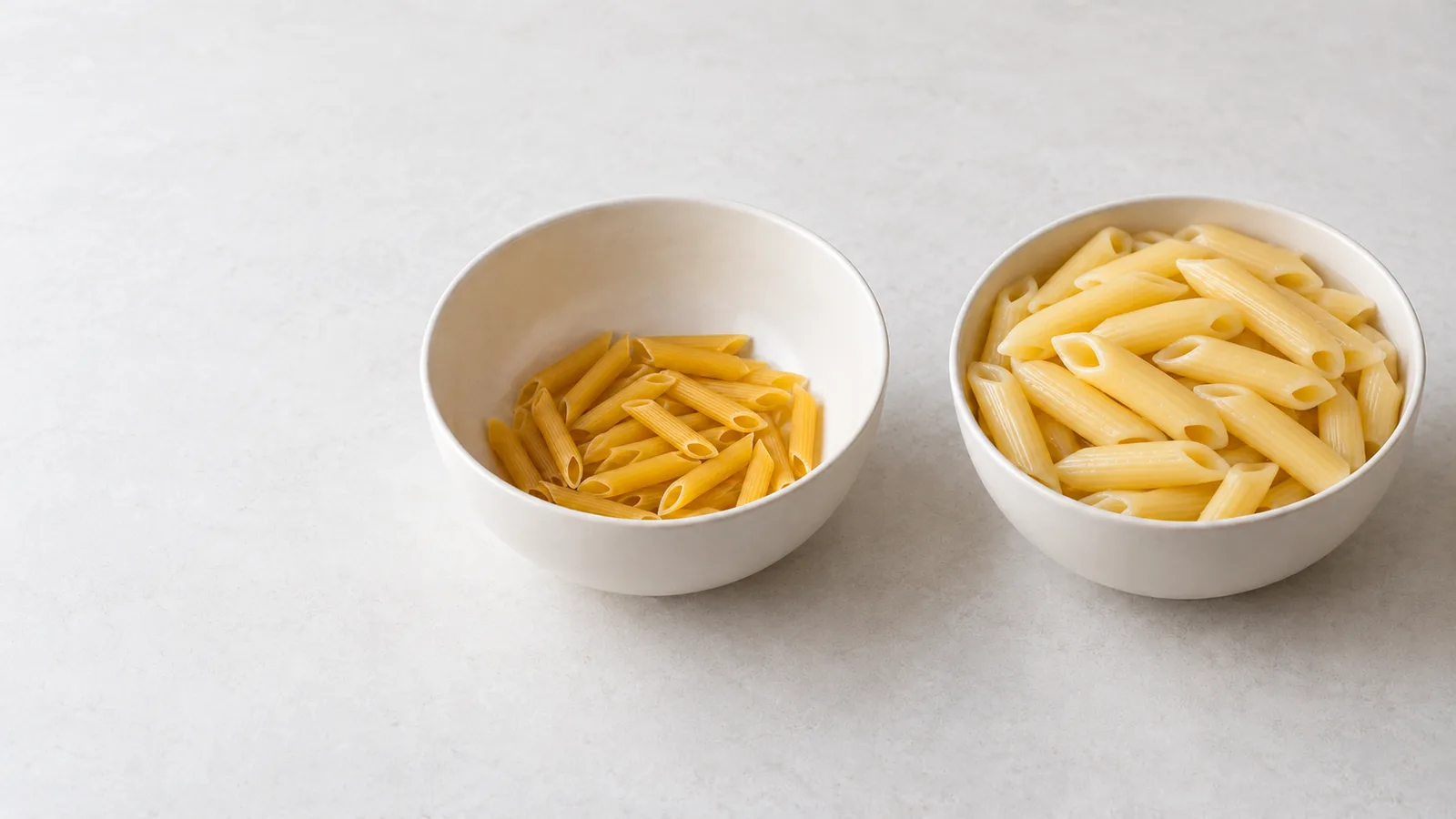
100 g of dry pasta contains 371 kcal. The same weight of cooked pasta contains 158 kcal. Both numbers are right: they describe the same food with different amounts of water [1].
The confusing part comes when the package describes dry food but the portion on your plate is already cooked. If you log meals to lose weight, choosing between those numbers can make an ordinary dinner feel complicated.
Weigh food raw or cooked, then log it in the same state. A dry weight needs a dry food entry, and a cooked weight needs a cooked entry. Raw or dry is often the easiest starting point when you cook from a package, and a cooked weight works when the food is already prepared.
Why cooking changes calories per 100 g
White rice and pasta absorb water as they cook. The water adds weight but no calories, so each gram of cooked rice or pasta holds less of the original dry food.
Water loss during cooking can increase calories per 100 g of meat. Meat can also lose fat and juices; the balance depends on the food and the cooking method [2].
What matters is the difference between calories in the whole amount and calories per 100 g. A lower number per 100 g after boiling does not mean the pasta lost calories.
Raw vs cooked calories in everyday foods
Every number below is kcal per 100 g in the stated state. These are reference values, not measurements of one batch before and after cooking. Use the label of your product when you have it [1].
| Food | Raw or dry (kcal) | Cooked (kcal) |
|---|---|---|
| White rice (raw / cooked) | 365 | 130 |
| Pasta (dry / cooked) | 371 | 158 |
| Oats (dry / cooked with water) | 379 | 71 |
| Black beans (raw / boiled) | 341 | 132 |
| Chicken breast (raw / roasted) | 120 | 165 |
| Ground beef, 80% lean (raw / pan-broiled patty) | 254 | 246 |
| Potato (raw / baked) | 77 | 93 |
| Spinach (raw / boiled) | 23 | 23 |
The ground beef row shows that "cooked means more calories per 100 g" is not a general rule. Fat can leave the meat during cooking along with water [2].
Two mix-ups that change the number you log
Weighing dry pasta, then choosing cooked pasta
100 g of dry pasta is 371 kcal. Logged as cooked pasta, the same weight shows 158 kcal: 371 − 158 = 213 kcal less in the diary.
The error comes from using a cooked value for a dry weight. If you weighed the pasta dry, use the dry entry, even if you log it after dinner.
Weighing cooked rice, then choosing raw rice
-
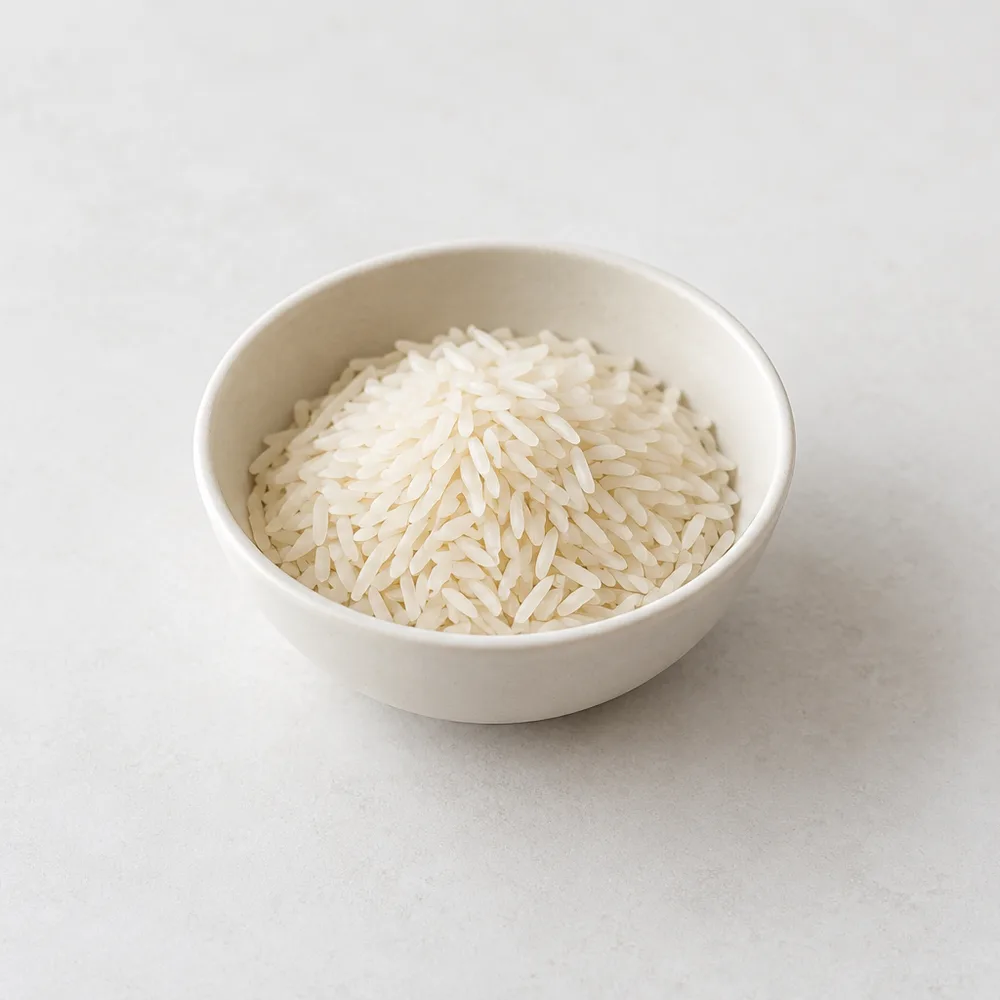 365 kcal White rice, raw 100 g
-
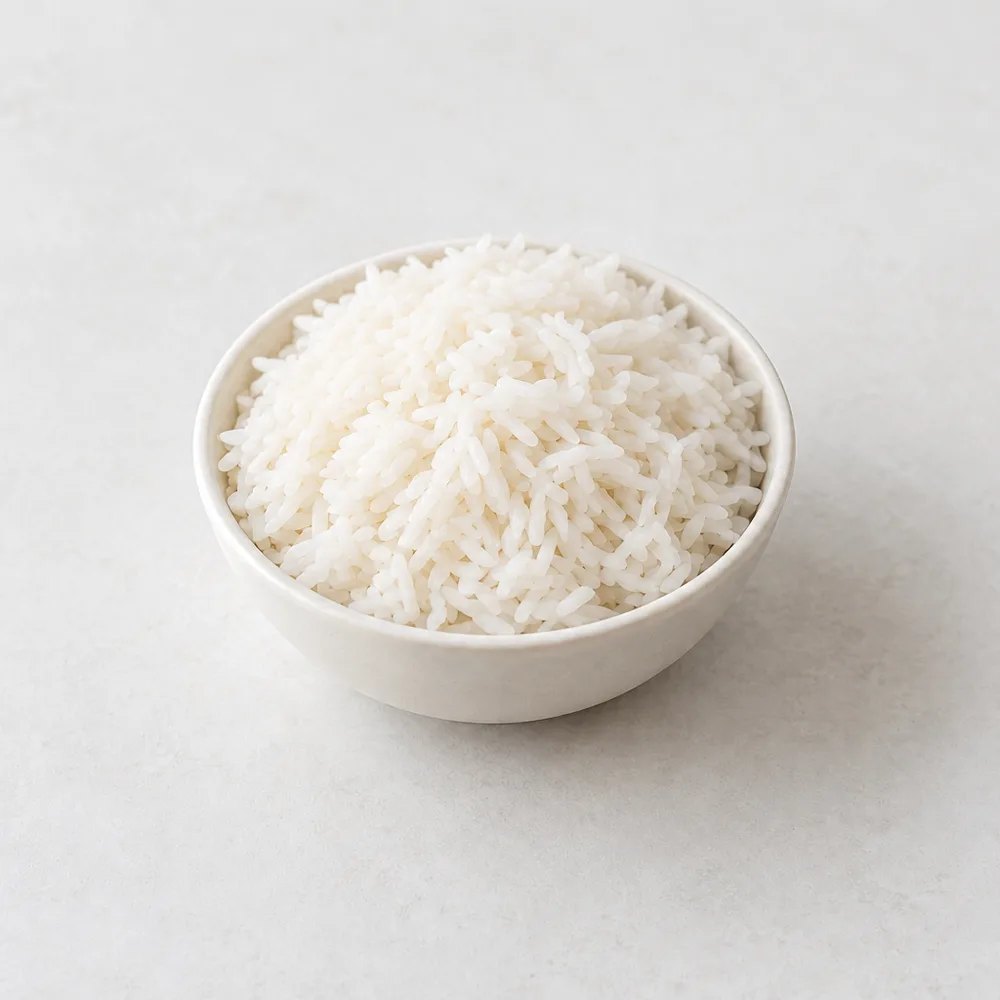 130 kcal White rice, cooked 100 g
-
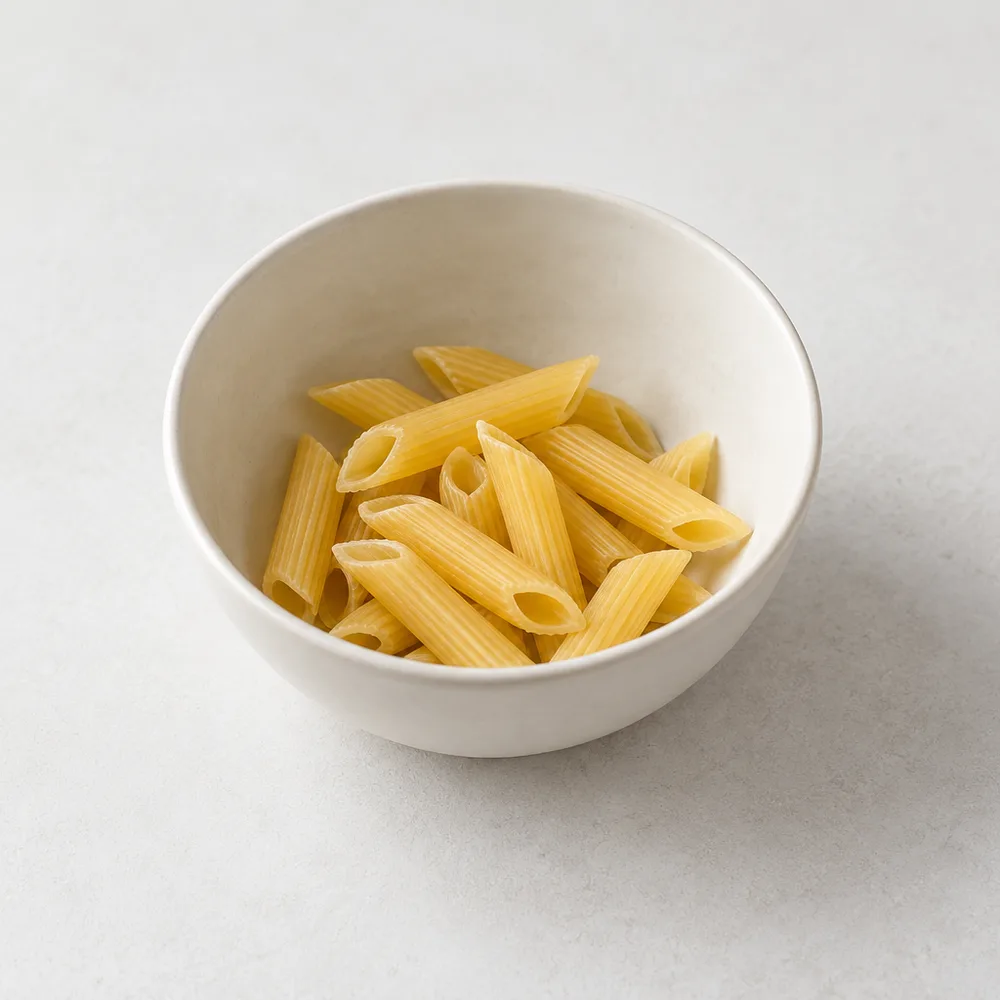 371 kcal Pasta, dry 100 g
-
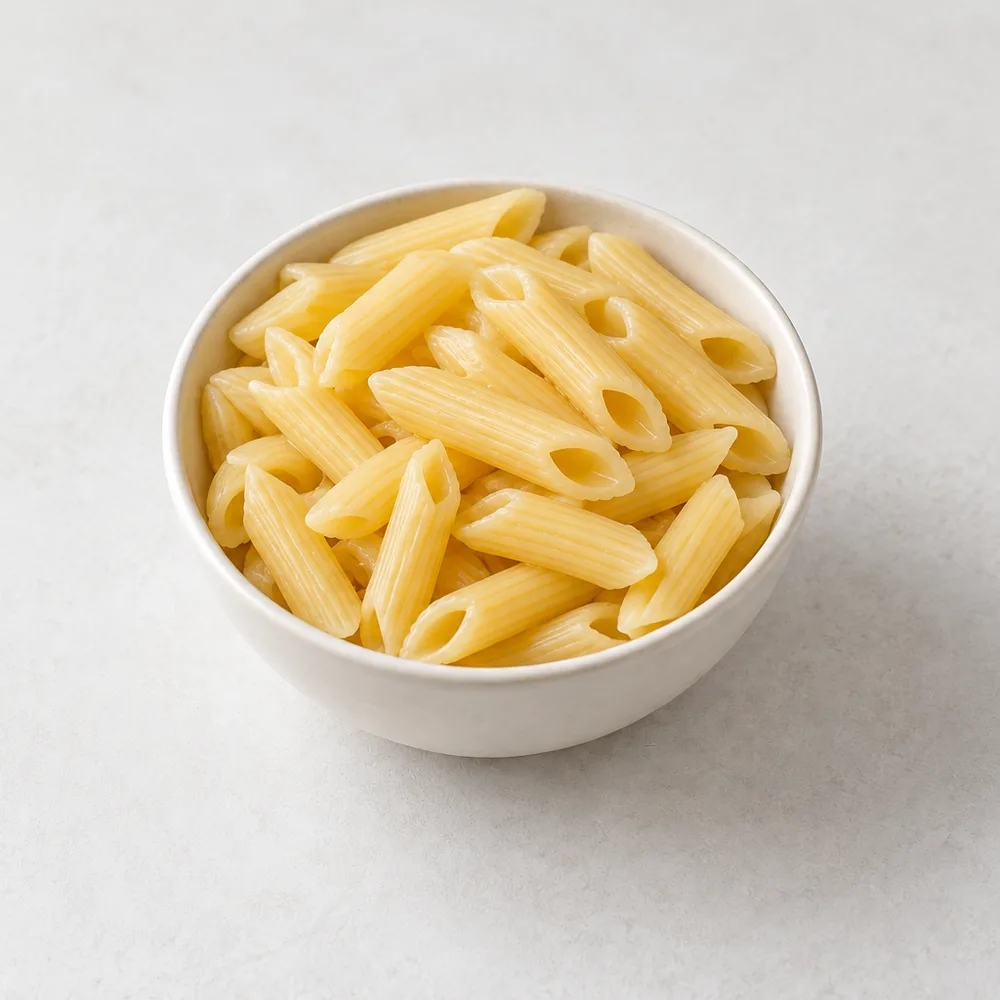 158 kcal Pasta, cooked 100 g
200 g of cooked rice is 200 ÷ 100 × 130 = 260 kcal. Logged as raw rice, it would show 200 ÷ 100 × 365 = 730 kcal.
The difference comes from the food entry you chose, not from the portion.
Which weight should you use?
Use raw or dry when you cook from a package. Check which state the label describes. For most foods, U.S. nutrition labels give values for the food as packaged or purchased, and an additional column may show it as prepared. For foods packed in liquid that is normally discarded, the values refer to the drained solids [3]. For a dry product, use the dry amount with the label values. The guide to how to read a nutrition label covers the label columns.
Use cooked when the food is already cooked. Weigh the portion you eat and choose an entry that matches how it was prepared, such as boiled or roasted. There is no need to work out a raw weight you never measured.
Match the preparation as well as the state. Oats cooked with water are not the same as oats cooked with milk. Log oil, sauce and other additions separately unless the entry already includes them.
The same rule applies to protein, carbs and fat: the weight and the food entry must describe the same thing. The guide to how to count macros covers the rest of the logging.
Why a fixed chicken conversion is only an estimate
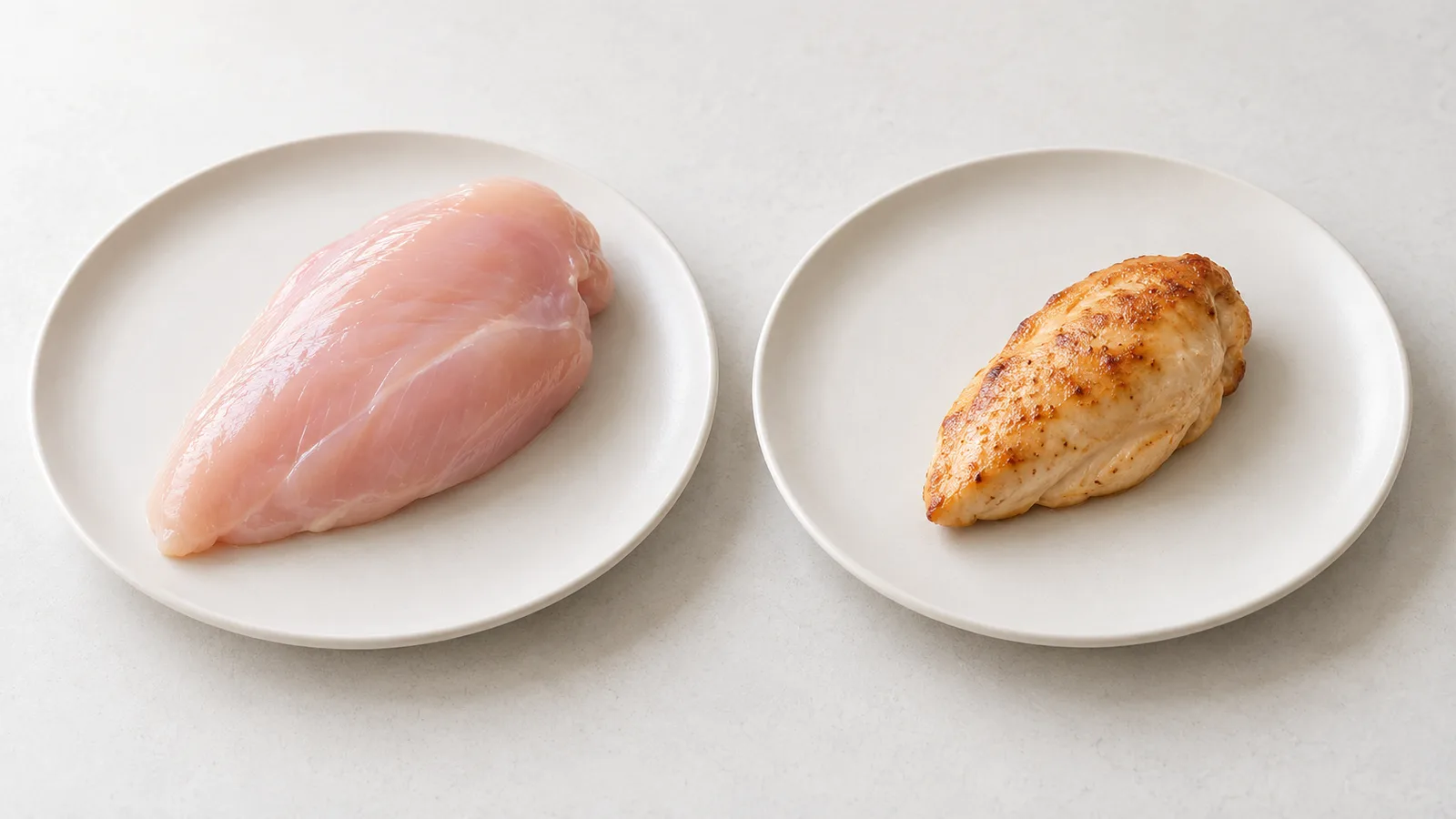
In the USDA table of cooking yields, roasted chicken breast kept on average 72% of its raw weight, with values from 61% to 82% in the data [2].
That range is why one conversion factor is not exact. If you only have cooked chicken, use its cooked weight with a cooked entry.
How to log a shared pot or batch
For a shared dish, add up the calories of the ingredients, then divide them over the finished food by weight. Include every ingredient that has calories.
Here is an example pot of white rice cooked in water only. The finished weight is made up for the example, not a measured or standard yield.
- Calories of the dry rice. 400 g of dry rice at 365 kcal per 100 g: 400 ÷ 100 × 365 = 1,460 kcal for the pot.
- Weigh the cooked total. Say the finished rice weighs 1,000 g without the pot. In your kitchen, use the weight you actually measure.
- Calories per cooked gram. 1,460 ÷ 1,000 = 1.46 kcal per gram.
- Weigh and log your share. A 250 g serving is 250 × 1.46 = 365 kcal.
Use this calculation instead of the general cooked-rice value from the table, because your pot may hold a different amount of water.
This works when everything you counted stays in the finished food and every portion is similar. If you pour off meat fat or cooking liquid, the raw total may be higher than what remains [2]. For dishes with separate pieces, log the parts on their own when portions differ.
Vegetables change volume too
Spinach has 23 kcal per 100 g raw and boiled, but a cup of raw spinach weighs 30 g and a cup of boiled spinach weighs 180 g [1]. Cooked leaves pack into much less space, so if you use cups, choose the cup measure for the state on your plate.
When you do not have a scale
Use a household measure or a portion description that matches the prepared food, and treat it as an estimate rather than trying to recover a raw weight you never measured. The guide to counting calories without weighing food explains how.
The same rule still helps: a cooked portion belongs with a cooked entry. Start with the state you can actually measure, and you will have a clear reason for every number you log.
Matching entries in ClariMeal
ClariMeal food entries name the state, such as raw, dry, cooked or roasted, so you can pick the one that matches what you weighed. Saved meals let you reuse a recipe you log often, and you can also log a meal by photo, search or barcode. A photo is sent for analysis only with your consent, and you review and correct the estimate before logging.
Sources
- U.S. Department of Agriculture, Agricultural Research Service. FoodData Central. fdc.nal.usda.gov ↑
- U.S. Department of Agriculture, Agricultural Research Service. USDA Table of Cooking Yields for Meat and Poultry. 2012. ars.usda.gov ↑
- U.S. Food and Drug Administration. 21 CFR 101.9, Nutrition labeling of food. law.cornell.edu ↑