Chicken breast: calories and nutrition
Calories and protein in chicken breast by cooking method and portion. Nutrition data: USDA, the same database as the ClariMeal app.
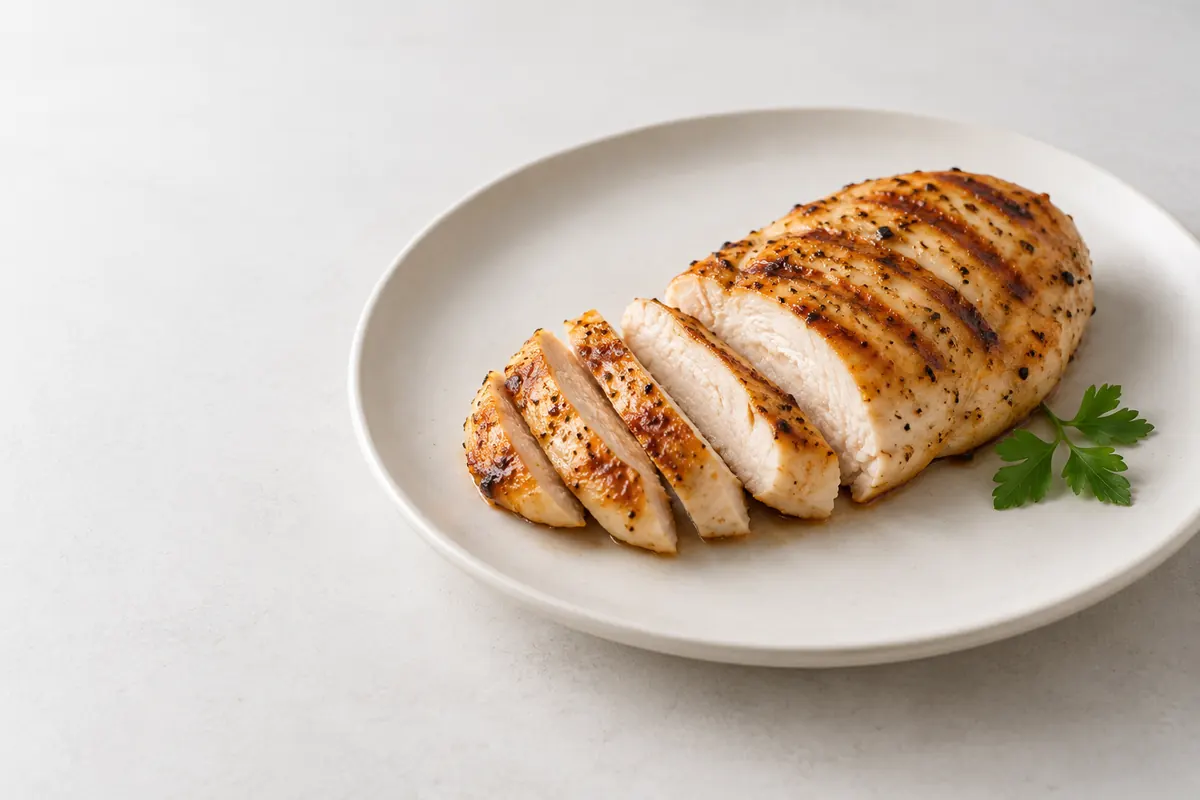
Roasted · 100 g
165kcal
- 31gProtein
- 0gCarbs
- 4gFat
- Fiber 0g
- Sugar 0g
- Saturated fat 1g
- Sodium 74mg
62% of the EU protein reference intake (50 g) · 8% of the EU energy reference intake (2,000 kcal)
Roasted · 150 g
248kcal
- 47gProtein
- 0gCarbs
- 5gFat
- Fiber 0g
- Sugar 0g
- Saturated fat 2g
- Sodium 111mg
93% of the EU protein reference intake (50 g) · 12% of the EU energy reference intake (2,000 kcal)
Roasted · 200 g
330kcal
- 62gProtein
- 0gCarbs
- 7gFat
- Fiber 0g
- Sugar 0g
- Saturated fat 2g
- Sodium 148mg
124% of the EU protein reference intake (50 g) · 17% of the EU energy reference intake (2,000 kcal)
Roasted · 4 oz (about 113 g)
186kcal
- 35gProtein
- 0gCarbs
- 4gFat
- Fiber 0g
- Sugar 0g
- Saturated fat 1g
- Sodium 84mg
70% of the EU protein reference intake (50 g) · 9% of the EU energy reference intake (2,000 kcal)
Grilled · 100 g
151kcal
- 31gProtein
- 0gCarbs
- 3gFat
- Fiber 0g
- Sugar 0g
- Saturated fat 1g
- Sodium 52mg
61% of the EU protein reference intake (50 g) · 8% of the EU energy reference intake (2,000 kcal)
Grilled · 150 g
227kcal
- 46gProtein
- 0gCarbs
- 5gFat
- Fiber 0g
- Sugar 0g
- Saturated fat 1g
- Sodium 78mg
92% of the EU protein reference intake (50 g) · 11% of the EU energy reference intake (2,000 kcal)
Grilled · 200 g
302kcal
- 61gProtein
- 0gCarbs
- 6gFat
- Fiber 0g
- Sugar 0g
- Saturated fat 2g
- Sodium 104mg
122% of the EU protein reference intake (50 g) · 15% of the EU energy reference intake (2,000 kcal)
Grilled · 4 oz (about 113 g)
171kcal
- 35gProtein
- 0gCarbs
- 4gFat
- Fiber 0g
- Sugar 0g
- Saturated fat 1g
- Sodium 59mg
69% of the EU protein reference intake (50 g) · 9% of the EU energy reference intake (2,000 kcal)
Raw · 100 g
120kcal
- 23gProtein
- 0gCarbs
- 3gFat
- Fiber 0g
- Sugar 0g
- Saturated fat 1g
- Sodium 45mg
45% of the EU protein reference intake (50 g) · 6% of the EU energy reference intake (2,000 kcal)
Raw · 150 g
180kcal
- 34gProtein
- 0gCarbs
- 4gFat
- Fiber 0g
- Sugar 0g
- Saturated fat 1g
- Sodium 68mg
68% of the EU protein reference intake (50 g) · 9% of the EU energy reference intake (2,000 kcal)
Raw · 200 g
240kcal
- 45gProtein
- 0gCarbs
- 5gFat
- Fiber 0g
- Sugar 0g
- Saturated fat 1g
- Sodium 90mg
90% of the EU protein reference intake (50 g) · 12% of the EU energy reference intake (2,000 kcal)
Raw · 4 oz (about 113 g)
136kcal
- 25gProtein
- 0gCarbs
- 3gFat
- Fiber 0g
- Sugar 0g
- Saturated fat 1g
- Sodium 51mg
51% of the EU protein reference intake (50 g) · 7% of the EU energy reference intake (2,000 kcal)
Per 100 g by cooking method
- Roasted, meat only165 3104
- Grilled, skinless and boneless151 3103
- Raw, skinless and boneless120 2303
Questions
Why does cooked chicken have more calories per 100 g than raw?
Cooking removes water. 100 g of cooked chicken has less water, so it has more protein and calories than 100 g of raw. Use raw values for raw weight and cooked values for cooked weight.
How much protein is in a chicken breast?
One grilled piece in the USDA data weighs 196 g and has about 60 g of protein.
What does % of the reference intake mean?
It compares the portion with the EU label reference intakes for an average adult: 50 g of protein and 2,000 kcal a day. It is not a personal target; the protein calculator estimates yours.
Sources. USDA FoodData Central, public domain. Source values per 100 g of the edible part. ClariMeal selected records, shortened names, calculated portions and rounded values. Portion weights: USDA FoodData Central. USDA FoodData Central. EU label reference intakes for adults: 50 g protein and 2,000 kcal. Regulation (EU) No 1169/2011, Annex XIII, Part B. Page updated .