High-Protein, Low-Calorie Breakfasts: 6 Ideas With Numbers
Mid-morning hunger can make a breakfast plan hard to follow. A meal can fit your calorie target and still leave you looking for a snack long before lunch.
Breakfast itself is optional for weight loss: research does not support adding it just for that purpose [1]. If you do eat breakfast, a practical starting point is a protein source together with foods that give you fiber and water [2, 3].
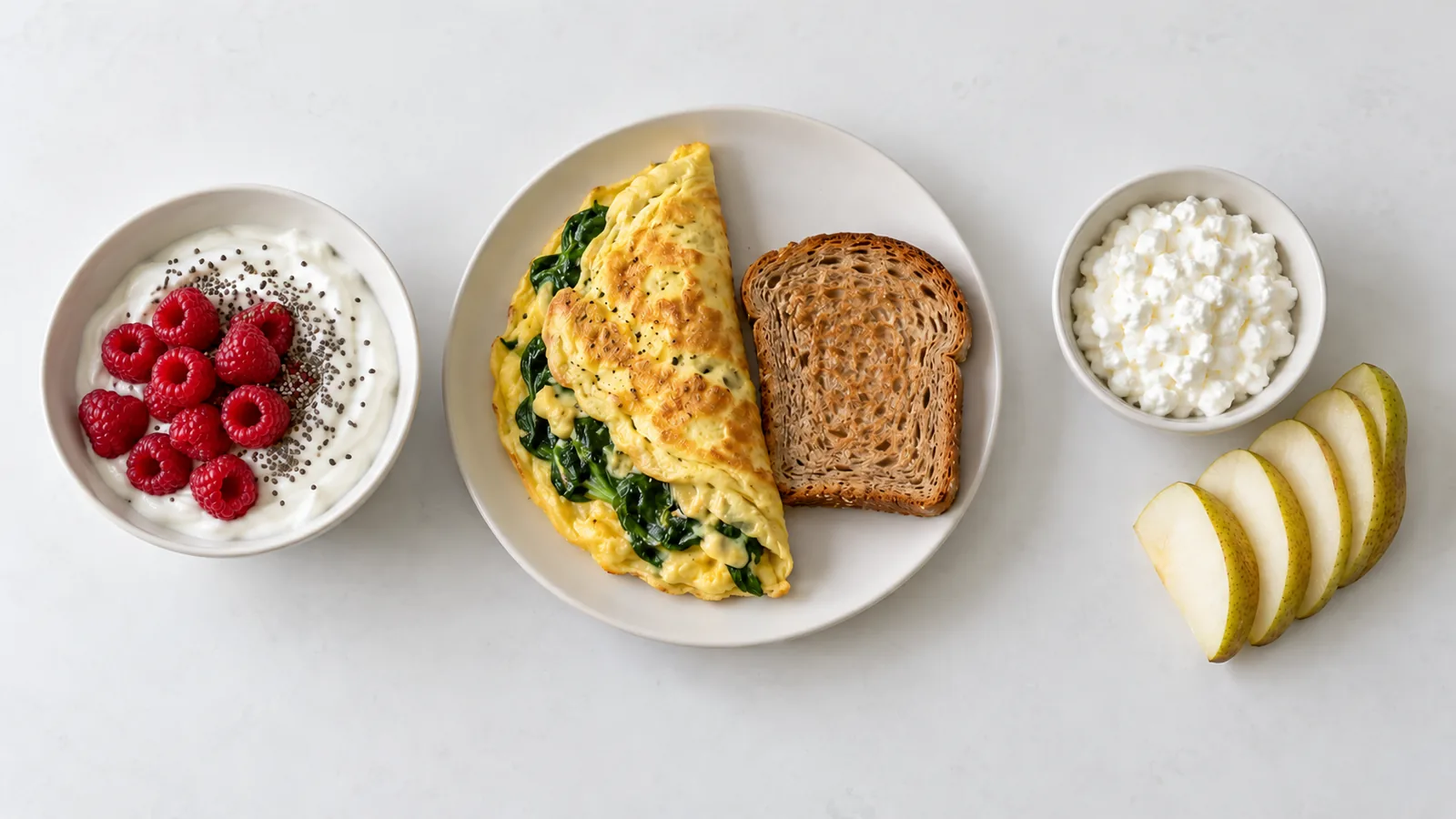
Below are six breakfasts with portions, calories, protein and fiber. Use them as starting points and adjust the amount to your appetite and the rest of your day.
Do you need breakfast to lose weight?
A 2019 review in the BMJ included 13 randomized trials in adults in high-income countries. It found no evidence that adding breakfast helped weight loss. In the pooled results on energy intake, people assigned to eat breakfast ate about 260 kcal more over the whole day, on average, than those assigned to skip it [1].
The trials were short and their results varied. All of them had a high or unclear risk of bias in at least one area, and the authors advised caution when recommending breakfast for weight loss [1].
That is not a reason to start skipping meals. It means you do not need to add breakfast just because you are trying to lose weight. If you enjoy breakfast or feel hungry in the morning, give yourself a meal that satisfies you.
What makes a breakfast filling?
Include a protein source
Higher-protein meals can modestly increase how full you feel, according to a 2015 review. That does not mean they reliably make people eat less at the next meal [2].
One small breakfast study shows the difference. Twenty young women with overweight or obesity who usually skipped breakfast tried breakfasts with either 13 g or 35 g of protein; both had 350 kcal. The higher-protein breakfast gave more fullness over the day [4].
This was a short study in a specific group. It does not set a protein target for everyone or show how long the breakfasts below will keep you satisfied. For your daily protein needs, see how much protein you need a day.
Add foods with fiber and water
Build around that protein source with fruit, vegetables or whole grains. They add fiber, so you are not choosing a breakfast by calories and protein alone. The guide to how much fiber you need a day covers the daily amount.
Water-rich foods also add weight and volume for relatively few calories. A review of energy-density research describes controlled studies in which people ate fewer calories with similar hunger and fullness when meals had fewer calories per gram [3]. See low-calorie, high-volume foods for more examples.
Six breakfasts with calories, protein and fiber
The figures below use the listed portions and USDA values from our food pages [5]. They are estimates for these combinations; brands and serving sizes can change your totals. Cooking fat and extra toppings are not included.
| Breakfast | Calories (kcal) | Protein (g) | Fiber (g) |
|---|---|---|---|
| Greek yogurt bowl | 222 | 18.1 | 11.4 |
| Oats with milk and berries | 385 | 14.0 | 7.6 |
| Eggs on toast | 258 | 17.6 | 3.4 |
| Cottage cheese and pear | 285 | 24.3 | 5.5 |
| Egg-white omelet | 211 | 21.9 | 2.6 |
| Tofu scramble | 227 | 19.5 | 5.4 |
 1. Greek yogurt bowl
 2. Oats with milk and berries
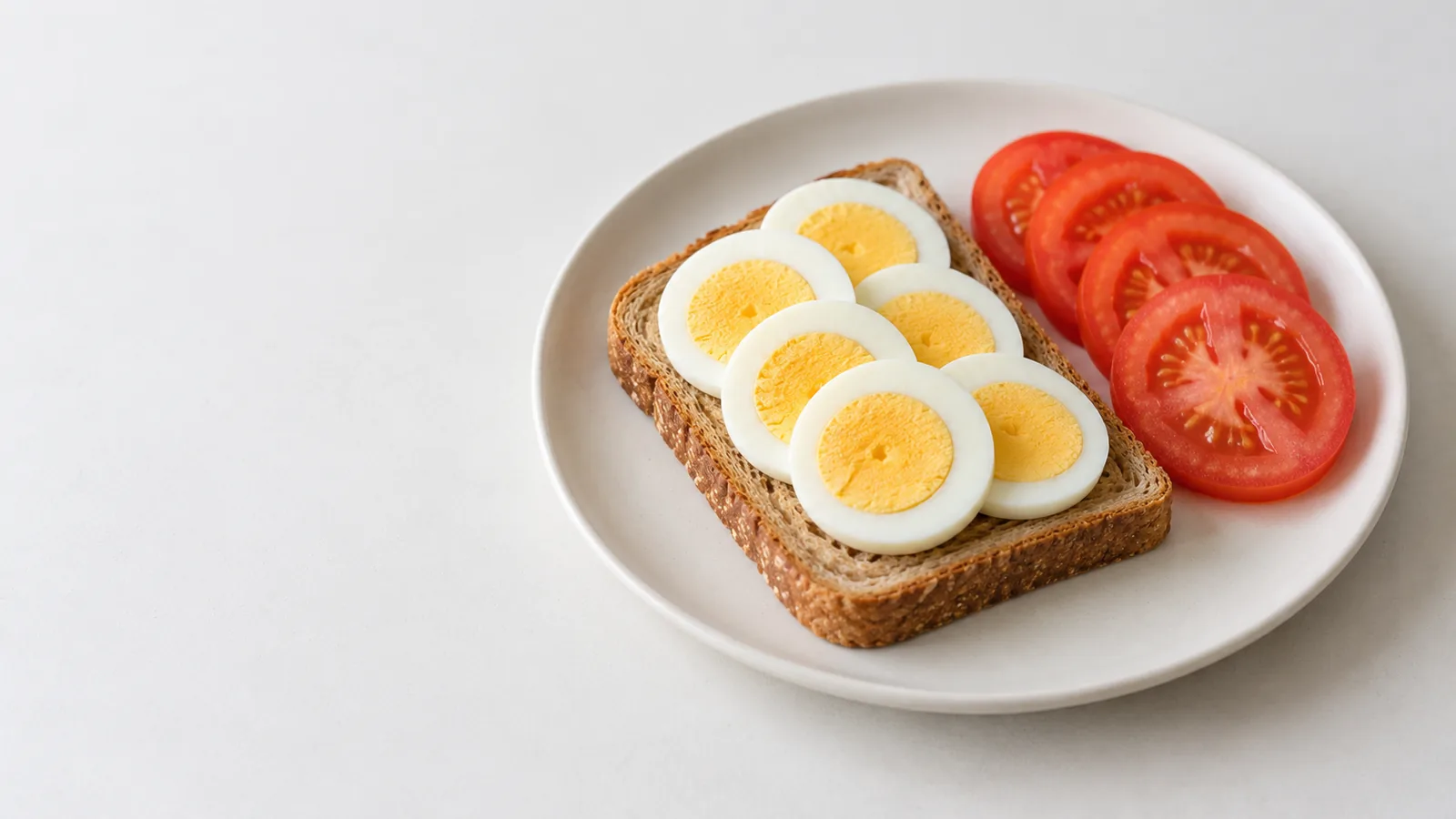 3. Eggs on toast
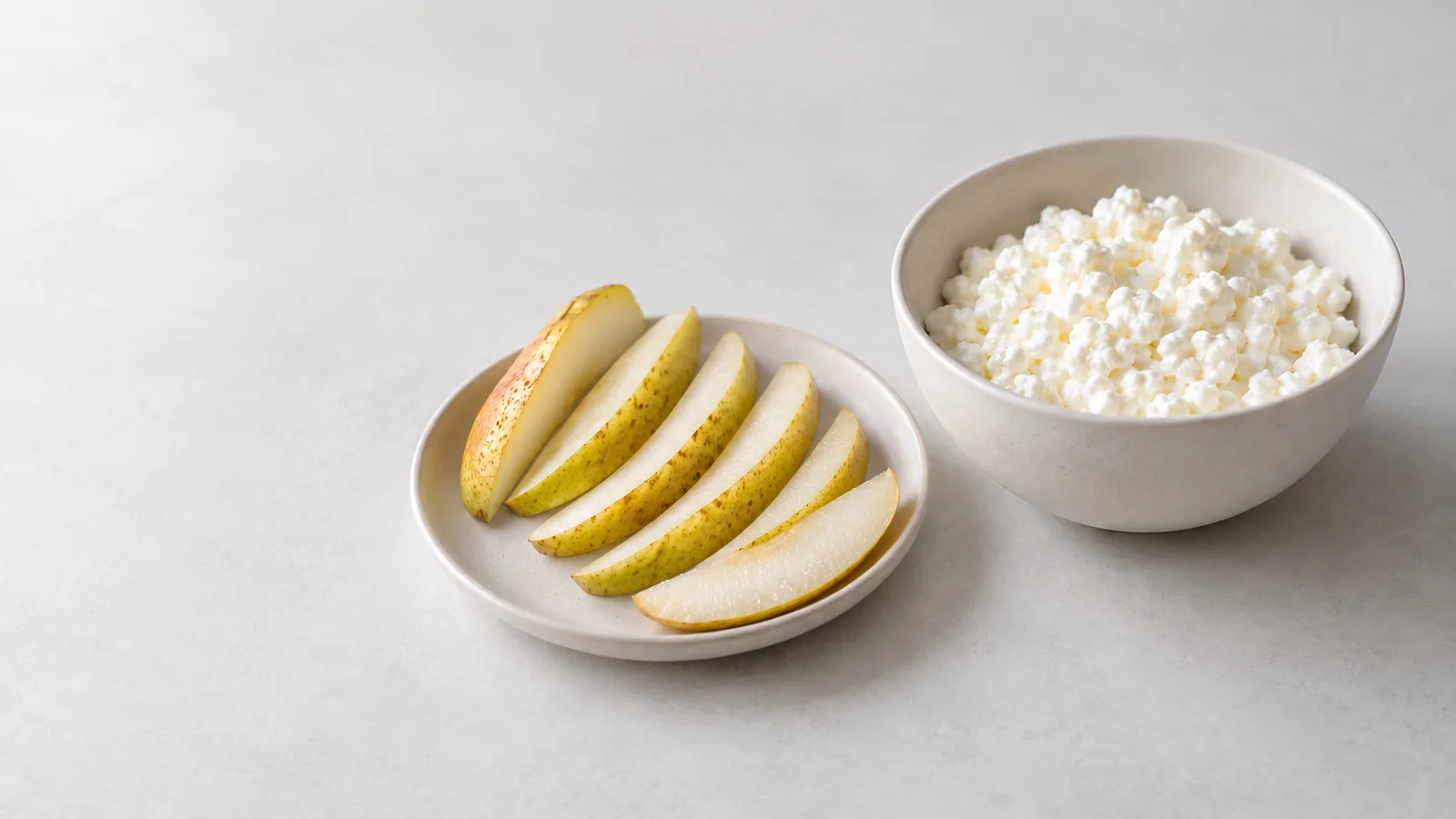 4. Cottage cheese and pear
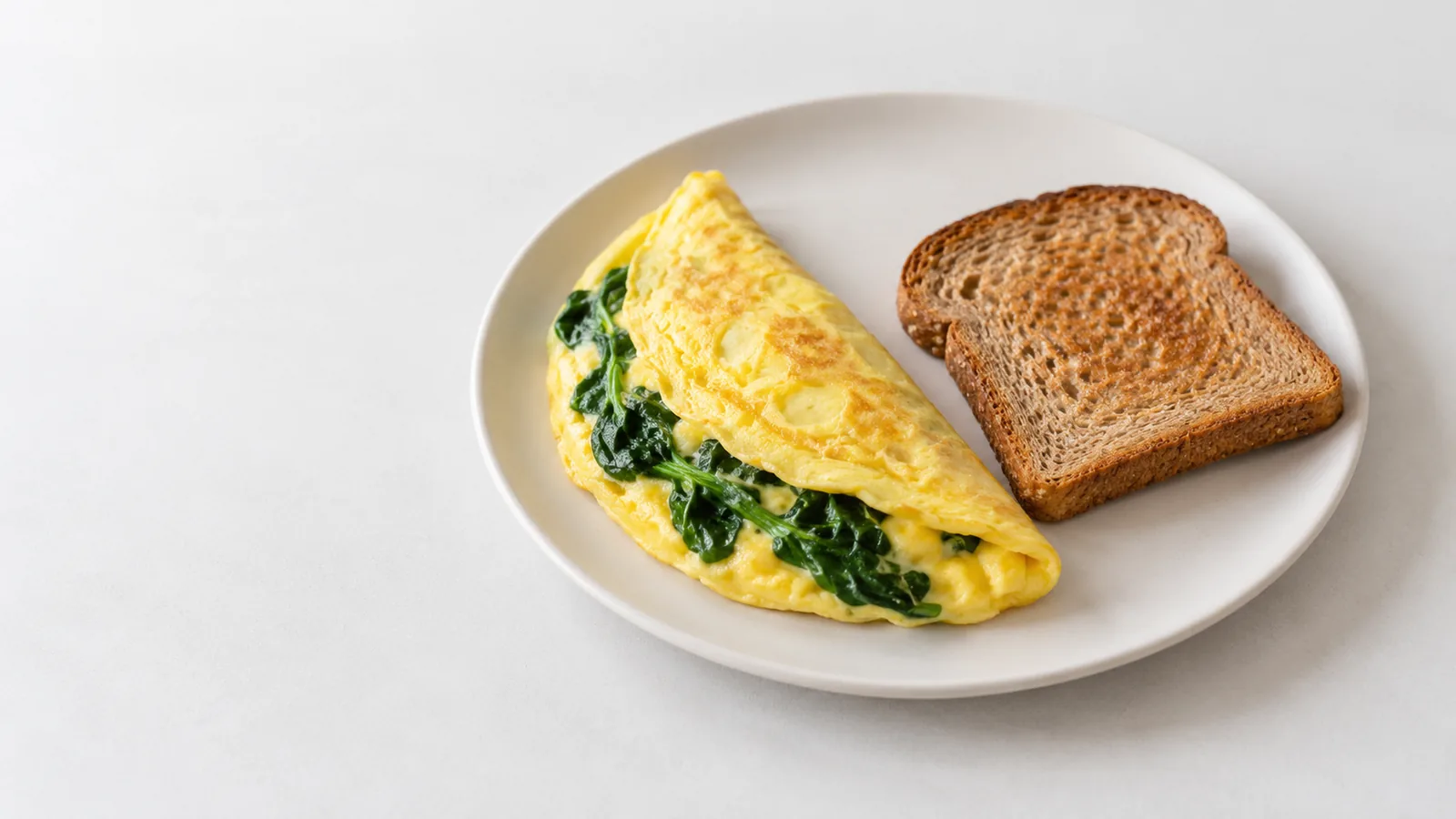 5. Egg-white omelet
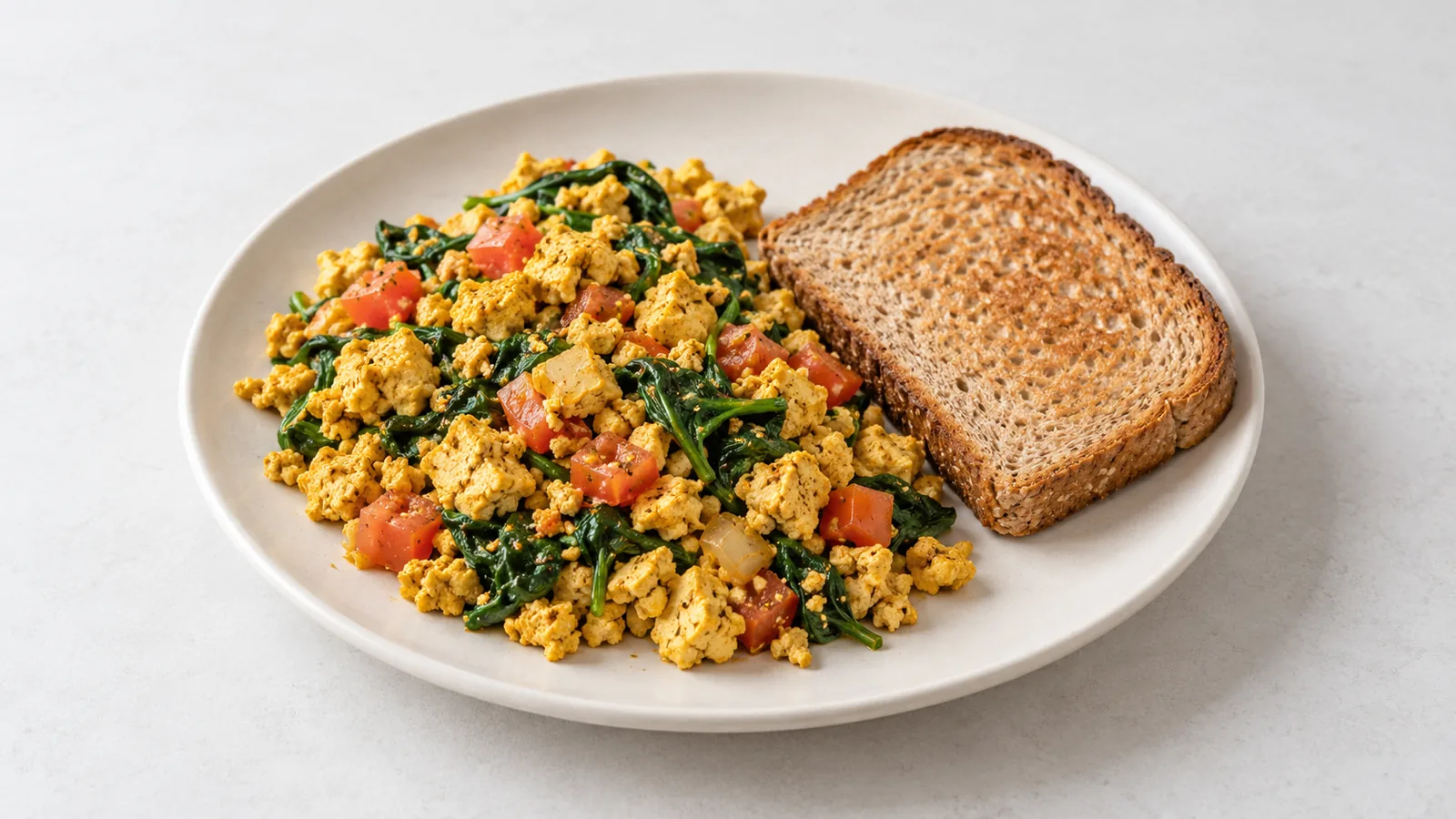 6. Tofu scramble
The breakfasts differ in both protein and fiber. The oats have less protein than the other five; they are here as a familiar breakfast you can adapt.
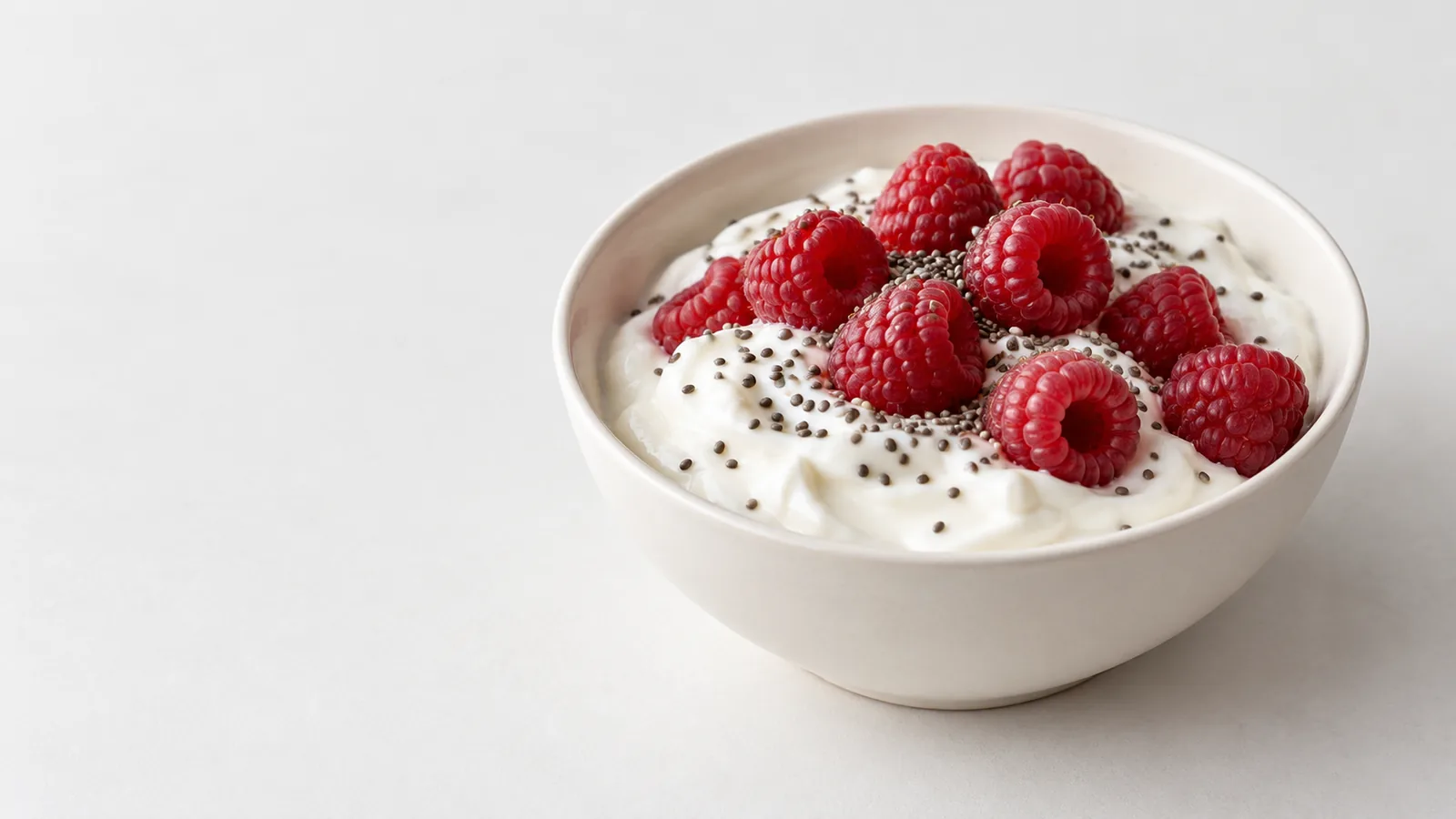
1. Greek yogurt bowl
Mix 150 g plain low-fat Greek yogurt, 1 cup raspberries (123 g) and 10 g chia seeds.
It needs no cooking and has 18.1 g of protein. It also has the most fiber of these six breakfasts, 11.4 g.
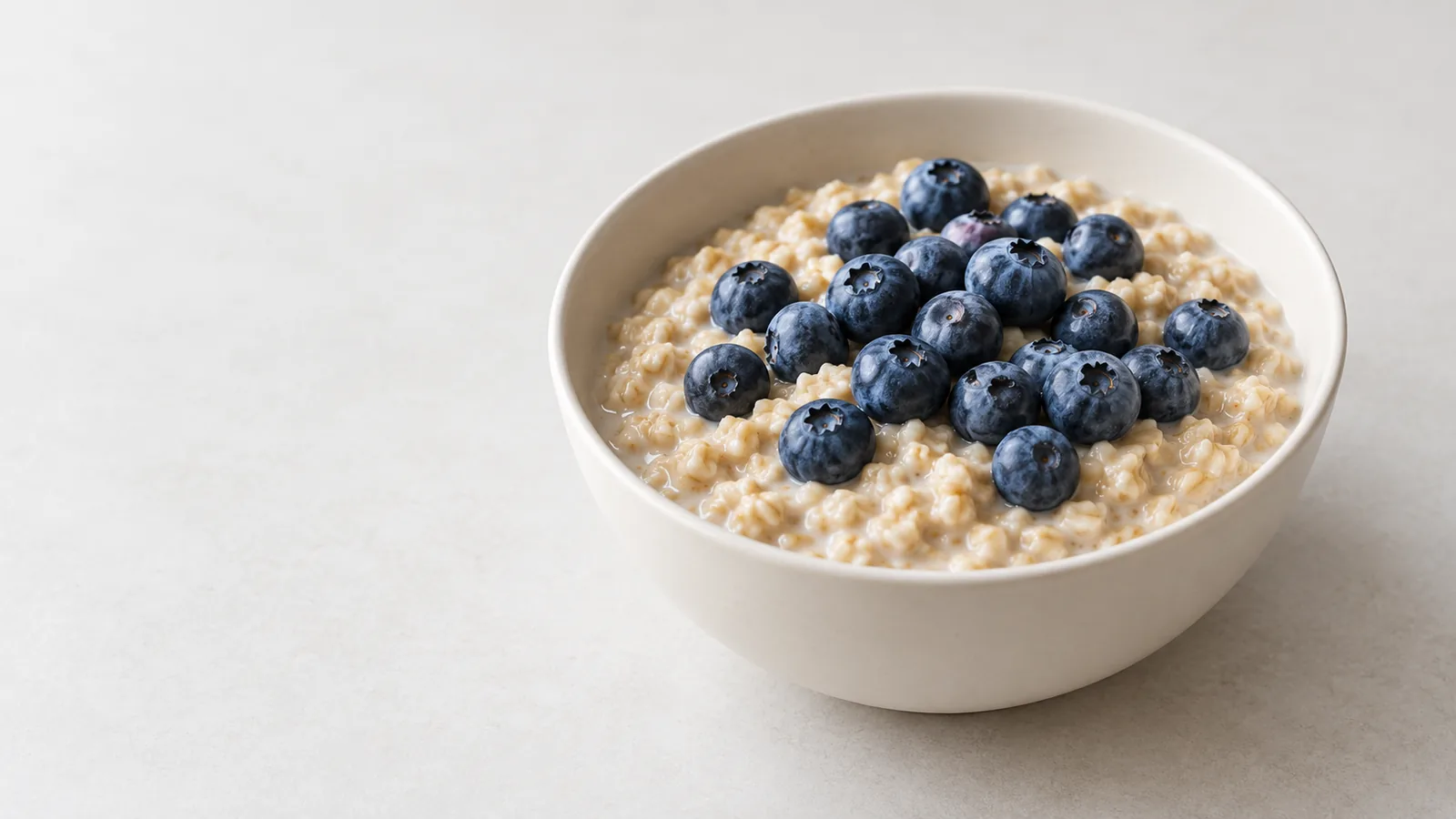
2. Oats with milk and berries
Cook 40 g dry oats with 1 cup whole milk (244 g), then add 1 cup blueberries (148 g).
At 14.0 g of protein, this is the lower-protein choice here. For more protein, serve it with plain Greek yogurt and add that to your meal total.
3. Eggs on toast
Serve 2 large hard-boiled eggs (100 g) with 1 slice whole-wheat bread (32 g) and 1 medium tomato (123 g).
Slice the eggs onto the toast and serve the tomato on the side. Hard-boiled eggs need no frying oil.
4. Cottage cheese and pear
Pair 1 cup 2% cottage cheese (226 g) with 1 medium pear (178 g).
Slice the pear into the bowl or eat it on the side. This breakfast has the most protein in the table, 24.3 g, with no cooking.
5. Egg-white omelet
Use 3 large egg whites (99 g), 1 large raw egg (50 g) and 1 cup spinach (30 g). Serve with 1 slice whole-wheat bread (32 g).
Cook the eggs and spinach in a nonstick pan until set. The toast is included in the 211 kcal total; any cooking fat is extra.
6. Tofu scramble
Crumble 150 g firm tofu and cook it with 1 cup spinach (30 g) and 1 medium tomato (123 g). Serve with 1 slice whole-wheat bread (32 g).
This breakfast gives 19.5 g of protein without eggs or dairy. Check your tofu's label when you log your own version, since products differ.
Count cooking fats and sweeteners you use
One teaspoon of olive oil adds 40 kcal [5]. The egg-white omelet, for example, becomes 251 kcal with that teaspoon.
Butter and sweeteners with calories, such as sugar, honey or syrup, also add to the total. Count the amount you use; they can still be part of the meal.
Adjust breakfast to your own calorie target
- Choose a breakfast you want to eat. Start with a sweet or savory option that suits your morning. You do not need a different recipe every day.
- Fit the portion into your day. Use your daily calorie target and your plans for other meals. If you need a bigger breakfast, increase the portions or add another food. If you want a smaller total, look at portions, cooking fats and toppings together.
- Check what changes with a swap. Replacing an ingredient changes more than the calories. Keep a protein source and some fiber in the meal, then use the label or food page for the version you eat.
- Use your appetite as feedback. If you are often hungry well before your next meal, try a bigger portion or a different combination. You do not need to ignore hunger to make a number work.
Once you find a breakfast you enjoy, keep its ingredients and usual portions in a note. Then you have a familiar starting point to adjust, without deciding everything again each morning. For more high-protein foods, see the high protein, low calorie foods table.
Log your breakfast in ClariMeal
ClariMeal includes your logged breakfast in the daily calorie and macro totals shown against your targets on the Today screen. Saved meals let you log the same breakfast again. You can log a meal by photo, search or barcode; a photo is sent for analysis only with your consent, and you review and correct the estimate before logging.
Log Your BreakfastLog Your Breakfast
Sources
- Sievert K, Hussain SM, Page MJ, et al. Effect of breakfast on weight and energy intake: systematic review and meta-analysis of randomised controlled trials. BMJ 2019;364:l42. doi.org/10.1136/bmj.l42 ↑
- Leidy HJ, Clifton PM, Astrup A, et al. The role of protein in weight loss and maintenance. American Journal of Clinical Nutrition 2015;101(6):1320S-1329S. doi.org/10.3945/ajcn.114.084038 ↑
- Rolls BJ. The relationship between dietary energy density and energy intake. Physiology & Behavior 2009;97(5):609-615. doi.org/10.1016/j.physbeh.2009.03.011 ↑
- Leidy HJ, Ortinau LC, Douglas SM, Hoertel HA. Beneficial effects of a higher-protein breakfast on the appetitive, hormonal, and neural signals controlling energy intake regulation in overweight/obese, "breakfast-skipping," late-adolescent girls. American Journal of Clinical Nutrition 2013;97(4):677-688. doi.org/10.3945/ajcn.112.053116 ↑
- U.S. Department of Agriculture, Agricultural Research Service. FoodData Central. fdc.nal.usda.gov ↑