Why People Stop Tracking Calories and How to Make It Easier
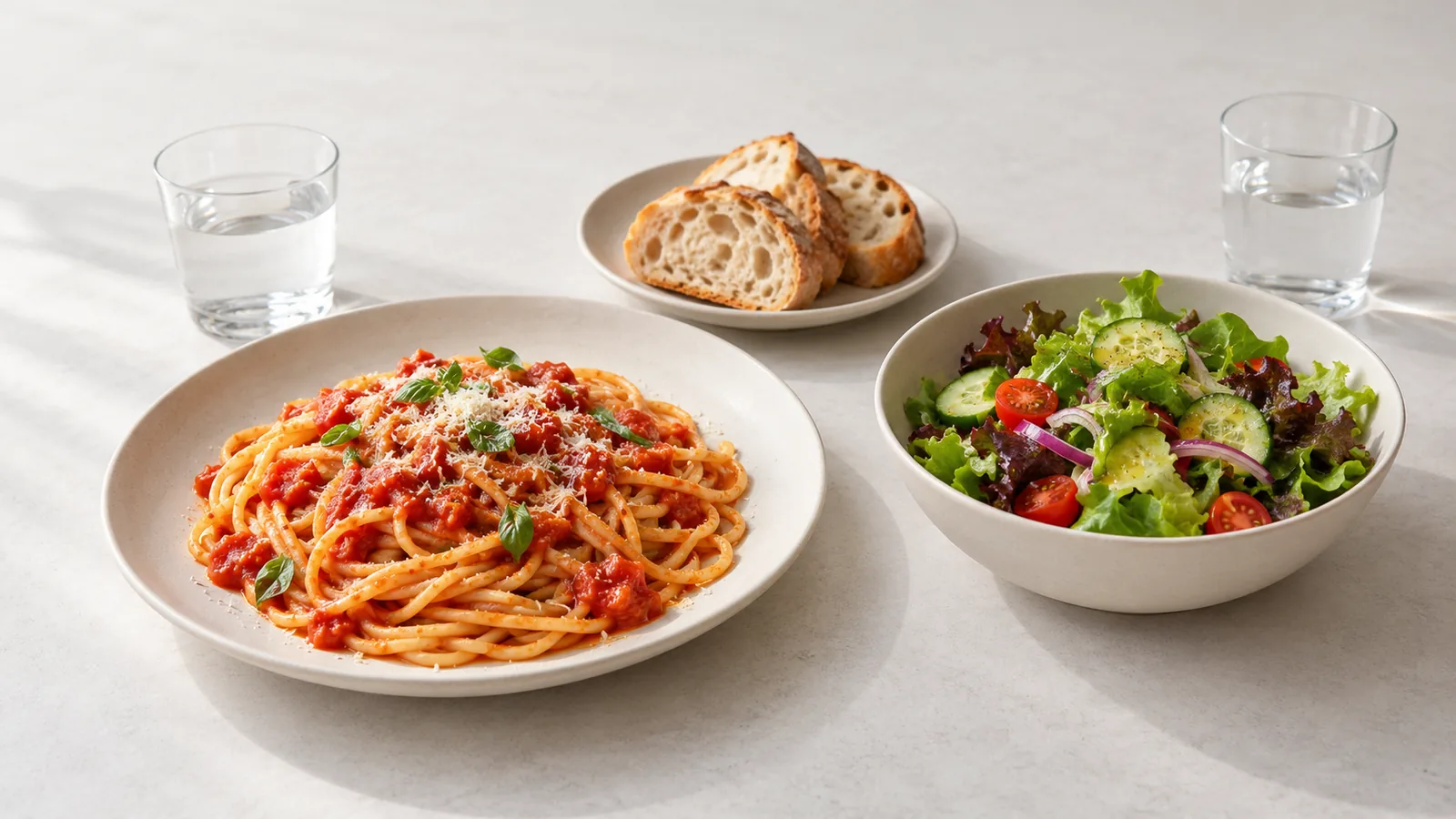
A homemade dinner is hard to enter. Then lunch goes unlogged, and after a few incomplete days the diary stays closed. The goal behind it has not changed: losing weight and understanding what you eat.
Research describes practical reasons this happens: the effort of logging, uncertain ingredients and portions, forgetting and discomfort around other people [1]. These are problems with the task, not a sign of weak willpower.
Consistency becomes harder when tracking requires too much work. Start by changing the part that made you stop: reuse familiar meals, keep a photo when you cannot log right away, make a reasonable estimate when details are missing and come back at the next meal after a gap.
What research says about why people stop
Cordeiro and colleagues surveyed 141 current and former food journalers and looked at 5,526 forum posts [1]. Participants described several barriers:
- Effort and repetition: logging felt like too much work, took too long or felt tedious.
- Homemade food: ingredients, amounts and the portion eaten were hard to estimate.
- Meals made by others: restaurant meals and social occasions came with unknown ingredients.
- Forgetting: missed entries sometimes led people to give up the diary.
- Social discomfort: some felt uncomfortable logging around other people.
This qualitative study describes experiences in its sample. It does not show how common each problem is among everyone who tracks calories.
A useful question to ask yourself: which part of logging became hard to keep doing? Choose a change that fixes that particular problem.
How much time does calorie tracking take?
In a 2019 study, Harvey and colleagues followed 142 participants in a 24-week online weight-control program [2]. The researchers measured time on a journal page used for food, exercise and weight entries. The averages below include only participants who used it that month:
| Point in the program | Minutes per day |
|---|---|
| Month 1 (142 participants) | 23.2 |
| Month 6 (93 participants) | 14.6 |
By month 6, 65.5% of participants were still recording something. That does not mean they logged every meal or every day.
The time went down during this particular program. These figures are not a daily requirement or a prediction for another tracking tool.
Why come back to tracking at all? A systematic review by Burke and colleagues found a consistent link between self-monitoring and weight loss, although the authors rated the evidence as weak because of study limitations [3]. Tracking may be useful, but it does not guarantee an outcome.
Five practical ways to make food logging easier
These are practical answers to the difficulties above. The studies did not test them together as a routine.
1. Log at the meal, or keep a photo to review
Choose a moment that fits your day, such as just after eating. If finishing an entry then is inconvenient, take a photo and pick a specific time to review it.
Use the photo as a reminder of the meal. Include drinks, additions and anything eaten afterward when you finish the entry. If you left part of the meal, adjust the portion to what you ate.
A photo cannot show hidden oil or sauce, exact weight or the full recipe. If you use a photo-based calorie estimate, check it against what you know about the meal before logging it.
2. Reuse meals you already know
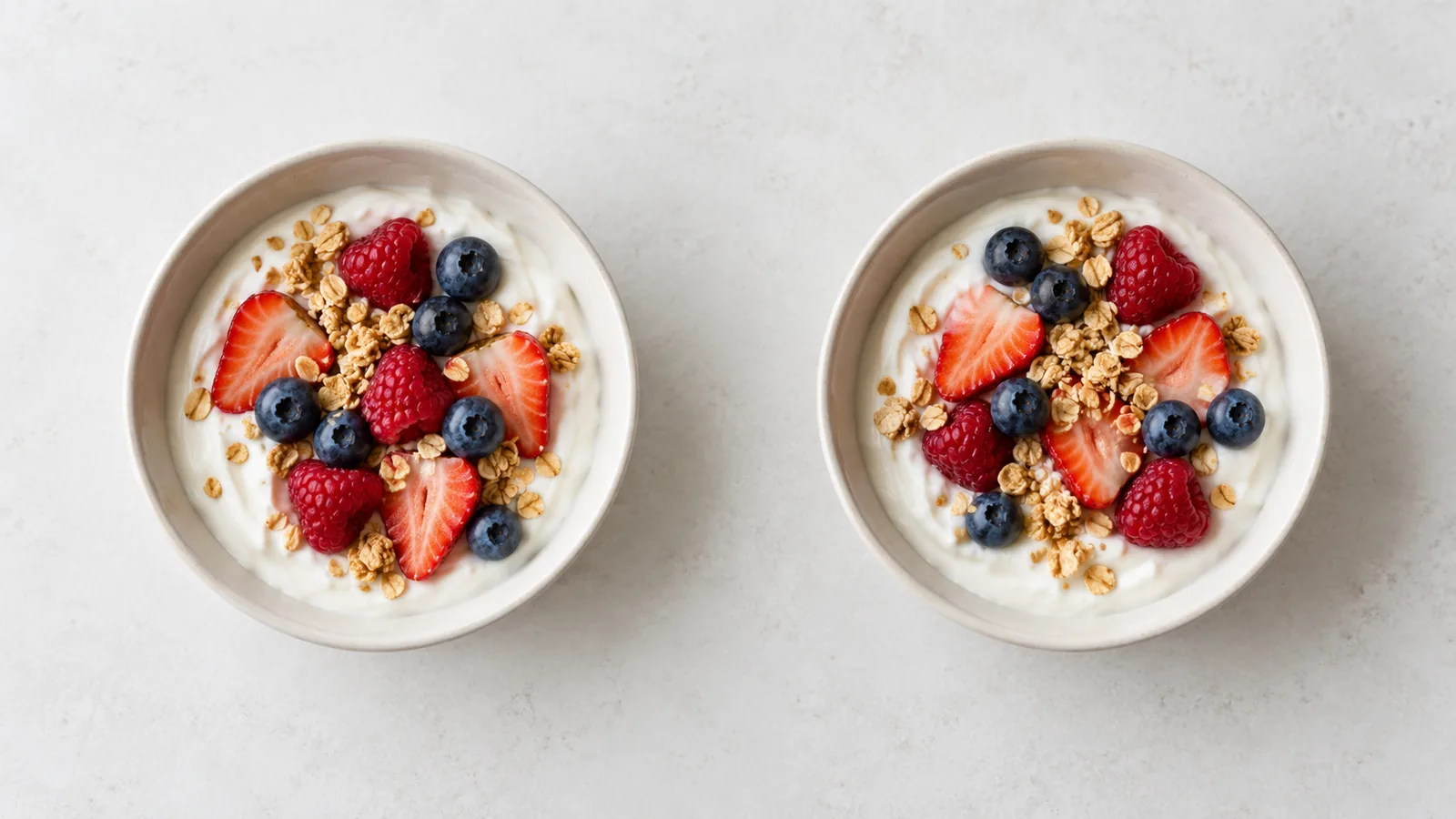
Start with a meal you eat often. If your diary supports saved meals, save the ingredients and your usual portions after you review the entry.
For example, save your usual breakfast of yogurt, oats and fruit. When you eat it again, check whether the amounts or toppings changed before you reuse it.
For homemade dishes, keep a note of the ingredients and how you divided the batch. Reuse it when the recipe and portion are similar, and update it when they change.
The same works in a notebook or spreadsheet: keep the details of familiar meals somewhere you can find them again.
3. Use a reasonable estimate when exact details are missing
For a restaurant meal, use the published nutrition information for that dish when it exists. Otherwise, choose a similar entry based on its main ingredients, how it was cooked and the portion. See how to count calories when you eat out.
For a homemade mixed dish, use the recipe information you have and estimate the share you ate. Add known extras such as oil or dressing, without counting them twice if the entry already includes them.
Choose the entry that matches the meal best. Once you have used the information you have, log it as an estimate. Searching again and again cannot give you recipe details you do not have.
For practical portion methods, see how to count calories without weighing food.
4. Give reminders a specific job
If you keep forgetting lunch, set a reminder for a moment when you can act on it. Make it specific: "Log lunch or review the meal photo."
Check whether the timing works in practice. If the reminder comes during a meeting or your commute, move it.
You can also attach logging to something you already do, such as putting your dishes away after lunch. Choose a moment that happens every day.
5. Plan how to log around other people
Decide beforehand what feels comfortable at a restaurant or a friend's home.
You might take a photo if that feels natural, make a short private note afterward or finish the entry when you get home. Include the main parts of the meal and your approximate portion.
If the recipe is not available, use a reasonable estimate. Choose a way that lets you enjoy the meal without explaining your tracking to anyone.
What to do after a missed day or week
Start again with your next meal. You do not need a new start date.
After a missed meal or day, add what you can reasonably rebuild from a photo, packaging or memory. If you cannot rebuild it, leave the gap rather than inventing a precise entry. A day with gaps only shows the food you logged; keep that in mind when you look back at your diary.
After a missed week, begin with today's meals. Before going back to the same routine, find what interrupted it and make one practical change: save the breakfast you kept entering again, move a reminder that comes at a bad time or decide how you will handle your next restaurant meal.
If a higher weigh-in made you stop, read why weight can go up in a calorie deficit.
If you want to stop tracking, you do not have to keep going for a complete diary. You can change the method or take a break.
The aim is a routine you can return to: familiar meals have reusable entries, uncertain meals have estimates you understand and a missing entry has a clear next step.
Put the routine into practice
Choose your next meal as a starting point. Reuse an entry if it still fits, or review a new estimate with the information you have.
Make logging easier in ClariMeal
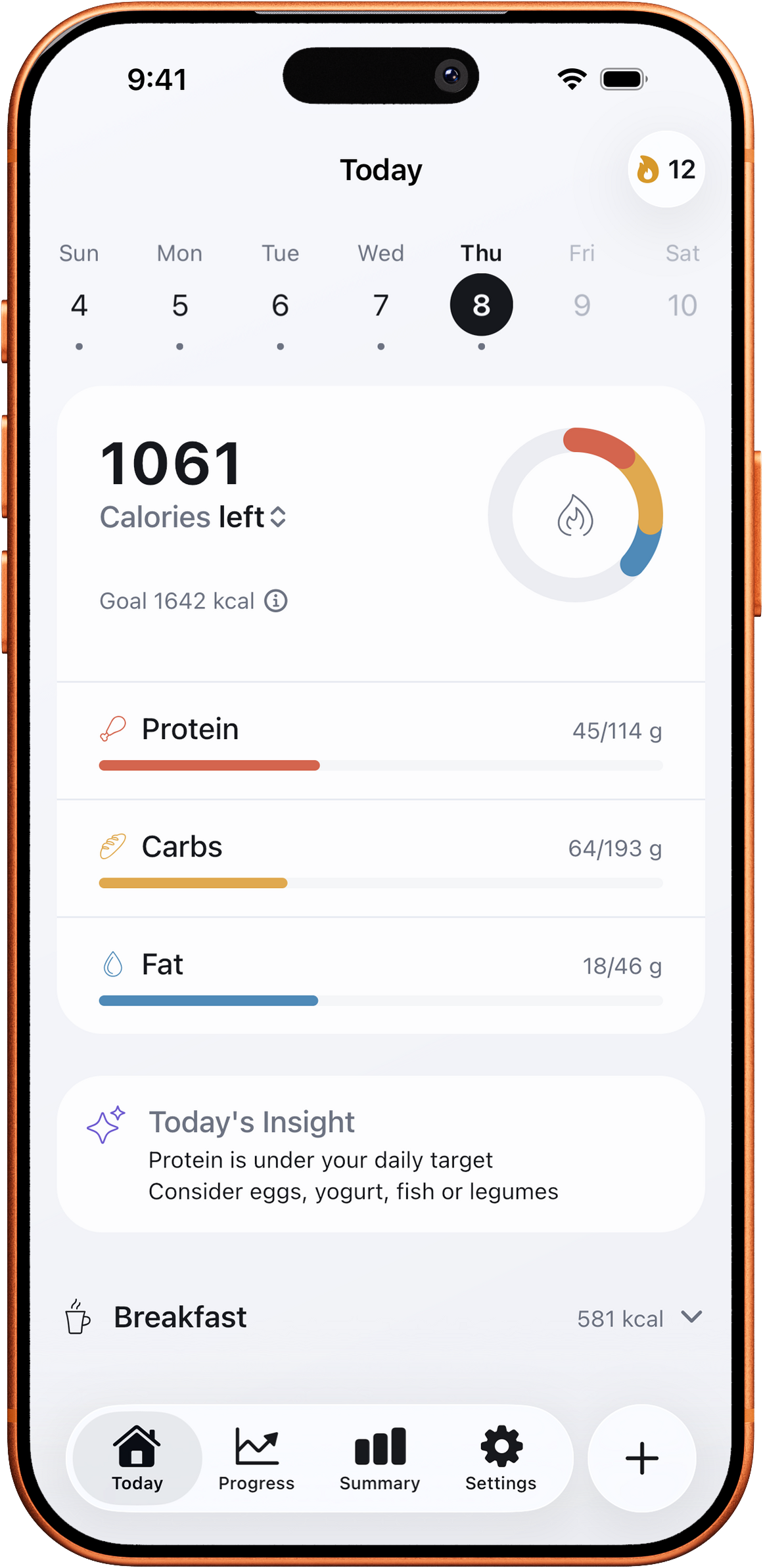
A meal you eat often can be saved; it opens as a card and is logged with its own button. You can set reminders in the app and log by photo, search or barcode. A photo is sent for analysis only with your consent, and you review and correct the estimate before logging.
Log a Meal by PhotoLog a Meal by Photo
Sources
- Cordeiro F, Epstein DA, Thomaz E, et al. Barriers and negative nudges: exploring challenges in food journaling. Proceedings of the SIGCHI Conference on Human Factors in Computing Systems 2015:1159-1162. doi.org/10.1145/2702123.2702155 ↑
- Harvey J, Krukowski R, Priest J, West D. Log often, lose more: electronic dietary self-monitoring for weight loss. Obesity 2019;27(3):380-384. doi.org/10.1002/oby.22382 ↑
- Burke LE, Wang J, Sevick MA. Self-monitoring in weight loss: a systematic review of the literature. Journal of the American Dietetic Association 2011;111(1):92-102. doi.org/10.1016/j.jada.2010.10.008 ↑