Salmon: calories and nutrition
Calories and protein in salmon by portion and type. Farmed salmon has more fat than wild salmon, so it has more calories.
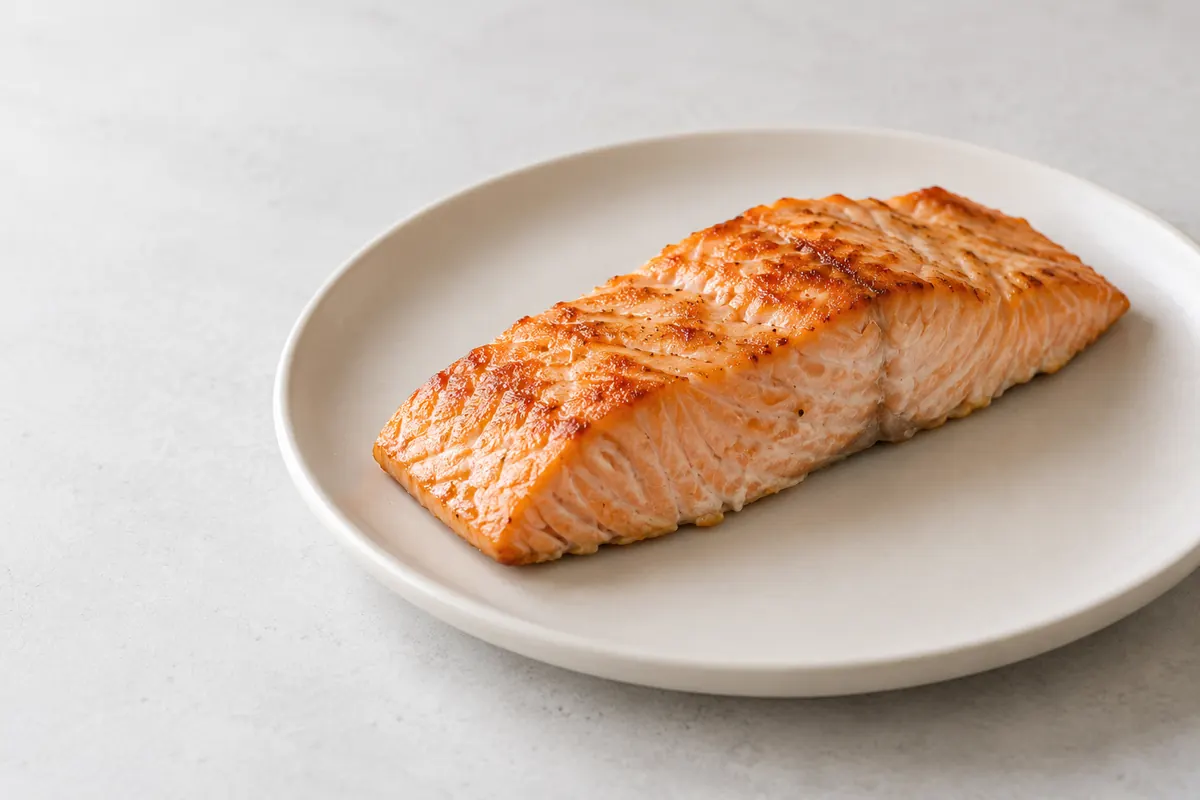
Farmed · 3 oz (85 g)
175kcal
- 19gProtein
- 0gCarbs
- 10gFat
- Fiber 0g
- Sugar 0g
- Saturated fat 2g
- Sodium 52mg
38% of the EU protein reference intake (50 g) · 9% of the EU energy reference intake (2,000 kcal)
Farmed · ½ fillet (178 g)
367kcal
- 39gProtein
- 0gCarbs
- 22gFat
- Fiber 0g
- Sugar 0g
- Saturated fat 4g
- Sodium 109mg
79% of the EU protein reference intake (50 g) · 18% of the EU energy reference intake (2,000 kcal)
Farmed · 100 g
206kcal
- 22gProtein
- 0gCarbs
- 12gFat
- Fiber 0g
- Sugar 0g
- Saturated fat 2g
- Sodium 61mg
44% of the EU protein reference intake (50 g) · 10% of the EU energy reference intake (2,000 kcal)
Farmed · 150 g
309kcal
- 33gProtein
- 0gCarbs
- 19gFat
- Fiber 0g
- Sugar 0g
- Saturated fat 4g
- Sodium 92mg
66% of the EU protein reference intake (50 g) · 15% of the EU energy reference intake (2,000 kcal)
Wild · 3 oz (85 g)
155kcal
- 22gProtein
- 0gCarbs
- 7gFat
- Fiber 0g
- Sugar no data
- Saturated fat 1g
- Sodium 48mg
43% of the EU protein reference intake (50 g) · 8% of the EU energy reference intake (2,000 kcal)
Wild · ½ fillet (154 g)
280kcal
- 39gProtein
- 0gCarbs
- 13gFat
- Fiber 0g
- Sugar no data
- Saturated fat 2g
- Sodium 86mg
78% of the EU protein reference intake (50 g) · 14% of the EU energy reference intake (2,000 kcal)
Wild · 100 g
182kcal
- 25gProtein
- 0gCarbs
- 8gFat
- Fiber 0g
- Sugar no data
- Saturated fat 1g
- Sodium 56mg
51% of the EU protein reference intake (50 g) · 9% of the EU energy reference intake (2,000 kcal)
Wild · 150 g
273kcal
- 38gProtein
- 0gCarbs
- 12gFat
- Fiber 0g
- Sugar no data
- Saturated fat 2g
- Sodium 84mg
76% of the EU protein reference intake (50 g) · 14% of the EU energy reference intake (2,000 kcal)
Raw · 3 oz (85 g)
177kcal
- 17gProtein
- 0gCarbs
- 11gFat
- Fiber 0g
- Sugar 0g
- Saturated fat 3g
- Sodium 50mg
35% of the EU protein reference intake (50 g) · 9% of the EU energy reference intake (2,000 kcal)
Raw · ½ fillet (198 g)
412kcal
- 40gProtein
- 0gCarbs
- 27gFat
- Fiber 0g
- Sugar 0g
- Saturated fat 6g
- Sodium 117mg
81% of the EU protein reference intake (50 g) · 21% of the EU energy reference intake (2,000 kcal)
Raw · 100 g
208kcal
- 20gProtein
- 0gCarbs
- 13gFat
- Fiber 0g
- Sugar 0g
- Saturated fat 3g
- Sodium 59mg
41% of the EU protein reference intake (50 g) · 10% of the EU energy reference intake (2,000 kcal)
Raw · 150 g
312kcal
- 31gProtein
- 0gCarbs
- 20gFat
- Fiber 0g
- Sugar 0g
- Saturated fat 5g
- Sodium 89mg
61% of the EU protein reference intake (50 g) · 16% of the EU energy reference intake (2,000 kcal)
Per 100 g by type
- Farmed206 22012
- Wild182 2508
- Raw208 20013
Questions
Which has more calories: salmon (farmed, cooked) or salmon (wild, cooked)?
Salmon (farmed, cooked): 206 kcal per 100 g, more than salmon (wild, cooked) with 182 kcal.
How much protein is in 100 kcal of salmon?
Salmon (farmed, cooked): about 11 g of protein per 100 kcal.
How many grams of salmon have about 100 kcal?
49 g of salmon (farmed, cooked) has 101 kcal.
What does % of the reference intake mean?
It compares the portion with the EU label reference intakes for an average adult: 50 g of protein and 2,000 kcal a day. It is not a personal target; the protein calculator estimates yours.
Sources. USDA FoodData Central, public domain. Source values per 100 g of the edible part. ClariMeal selected records, shortened names, calculated portions and rounded values. USDA FoodData Central. Portion weights: USDA FoodData Central. EU label reference intakes for adults: 50 g protein and 2,000 kcal. Regulation (EU) No 1169/2011, Annex XIII, Part B. Page updated .