Croissant: calories and nutrition
Calories and protein in croissant by portion. Values are for a plain butter croissant without filling.
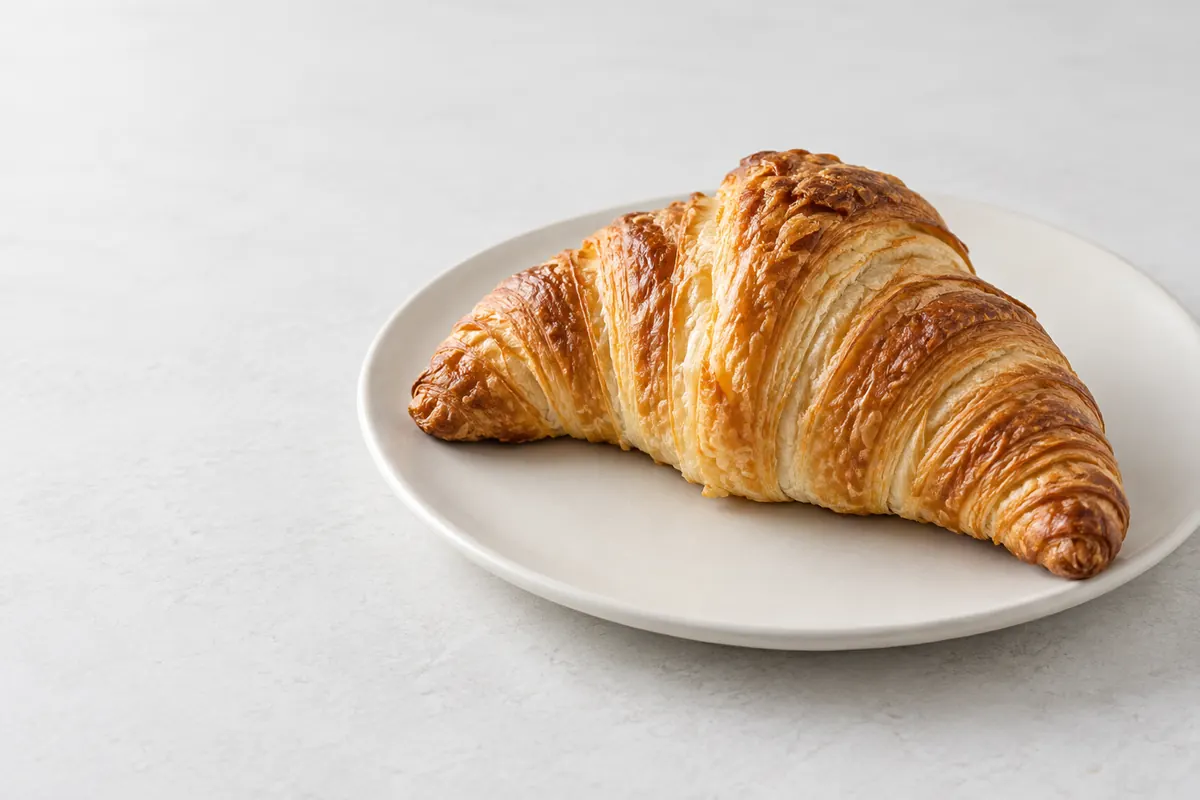
Butter · 1 medium croissant (57 g)
231kcal
- 5gProtein
- 26gCarbs
- 12gFat
- Fiber 1g
- Sugar 6g
- Saturated fat 7g
- Sodium 219mg
9% of the EU protein reference intake (50 g) · 12% of the EU energy reference intake (2,000 kcal)
Butter · 1 large croissant (67 g)
272kcal
- 5gProtein
- 31gCarbs
- 14gFat
- Fiber 2g
- Sugar 8g
- Saturated fat 8g
- Sodium 257mg
11% of the EU protein reference intake (50 g) · 14% of the EU energy reference intake (2,000 kcal)
Butter · 100 g
406kcal
- 8gProtein
- 46gCarbs
- 21gFat
- Fiber 3g
- Sugar 11g
- Saturated fat 12g
- Sodium 384mg
16% of the EU protein reference intake (50 g) · 20% of the EU energy reference intake (2,000 kcal)
Butter · 150 g
609kcal
- 12gProtein
- 69gCarbs
- 32gFat
- Fiber 4g
- Sugar 17g
- Saturated fat 17g
- Sodium 576mg
25% of the EU protein reference intake (50 g) · 30% of the EU energy reference intake (2,000 kcal)
Questions
How much protein is in 100 kcal of croissant?
Croissant: about 2 g of protein per 100 kcal.
How many grams of croissant have about 100 kcal?
25 g of croissant has 102 kcal.
What does % of the reference intake mean?
It compares the portion with the EU label reference intakes for an average adult: 50 g of protein and 2,000 kcal a day. It is not a personal target; the protein calculator estimates yours.
Sources. USDA FoodData Central, public domain. Source values per 100 g of the edible part. ClariMeal selected records, shortened names, calculated portions and rounded values. USDA FoodData Central. Portion weights: USDA FoodData Central. EU label reference intakes for adults: 50 g protein and 2,000 kcal. Regulation (EU) No 1169/2011, Annex XIII, Part B. Page updated .